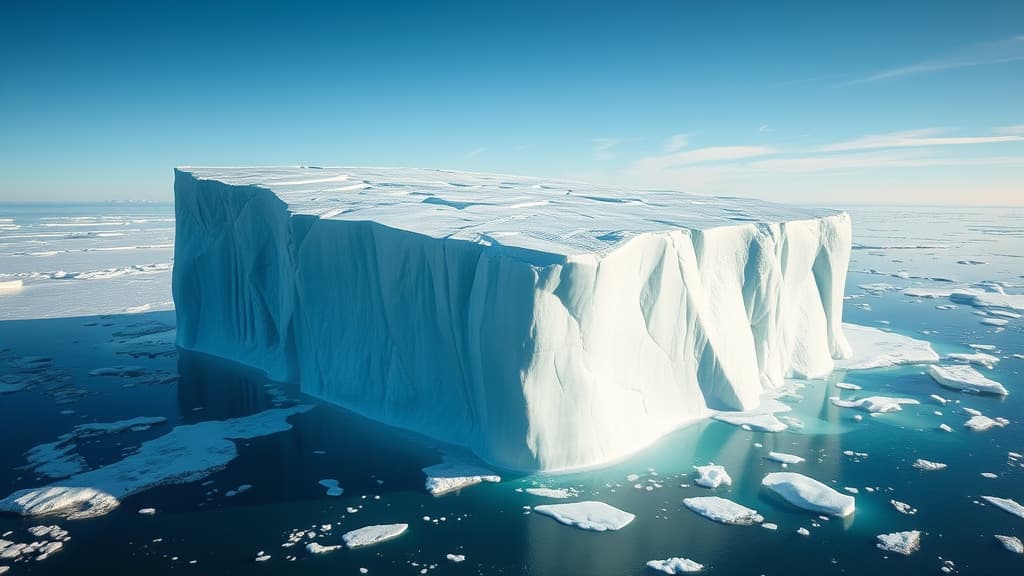
On August 4, 2026, a significant calving event occurred as a 76.4 square kilometer ice island separated from Greenland's Petermann Glacier, marking the largest ice loss in the Arctic since 2020. This event raises concerns about the stability of the glacier and its broader implications for climate change and marine safety.
The newly formed ice island is approximately 150 meters thick and covers an area comparable to Manhattan. Its detachment highlights ongoing changes in glacier dynamics, with scientists warning that further ice loss is likely. Two additional ice sections, measuring approximately 94 square kilometers and 84 square kilometers, are predicted to break off soon, which could reduce the glacier's floating ice tongue by a total of 254 square kilometers.
Key Points
- The calving event was anticipated after extensive satellite monitoring revealed significant fractures in the glacier's ice tongue.
- Research on this phenomenon has been ongoing since 2019, with institutions like the University of Ottawa and the University of Stirling leading the studies.
- Large ice formations present risks for Arctic shipping, as they may drift and fragment into smaller, less predictable pieces, endangering maritime operations.
This calving significantly alters the landscape of the Petermann Glacier and serves as a stark reminder of the ongoing challenges faced by polar regions in the face of climate change. Monitoring efforts remain crucial to understand the ramifications of such events not only on the glacier itself but also on the surrounding marine ecosystem and shipping routes.