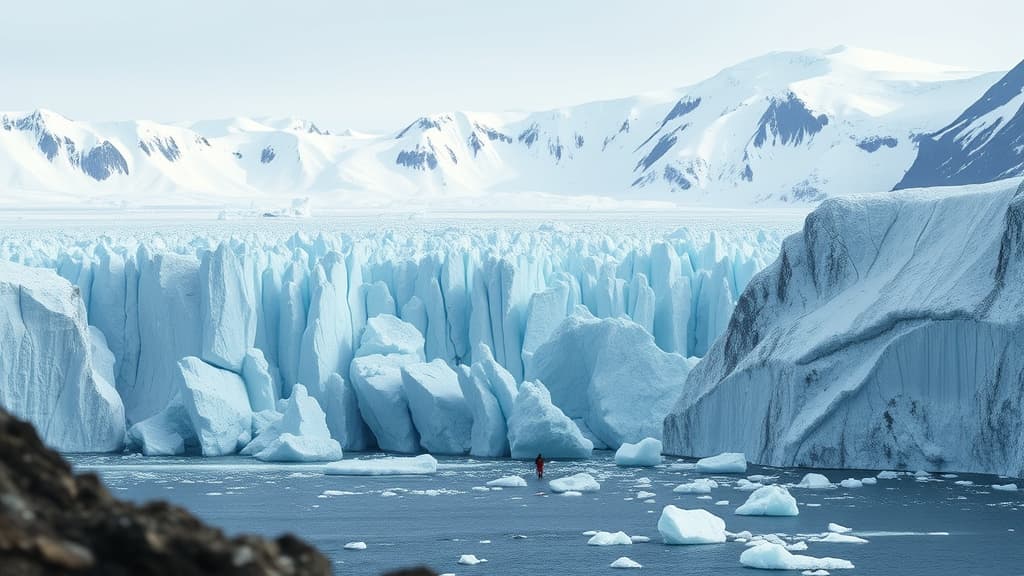
On August 4, 2026, the Petermann Glacier in Greenland experienced a significant calving event, releasing an ice island measuring 76.4 km² — roughly the size of Manhattan. This marks the largest ice loss from the glacier since 2012. Scientists predict that two more sizable sections could soon detach, potentially reducing the ice tongue's mass by 22%.
Key Facts
- The newly calved ice island is approximately 150 meters thick, representing a drastic shift in the Arctic's glacial landscape.
- Long-term satellite monitoring has shown increasing instability in the ice tongue since 2019, culminating in this calving event. Researchers from the University of Ottawa contributed to identifying these changes.
- Two additional sections, measuring 94 km² and 84 km², are anticipated to break away soon, bringing the total projected loss to about 254 km².
- The floating ice mass could disrupt Arctic shipping routes. Large ice pieces may drift for extended periods, fragmenting into smaller, harder-to-track sections that pose risks to vessels and infrastructure.
- This calving event exemplifies ongoing climate change impact, providing researchers with critical data to study the behavior of Arctic ice masses and their interaction with ocean conditions.
This event not only highlights the changing dynamics of Arctic ice but also raises concerns regarding potential implications for global sea levels. With the possibility of further ice loss, the situation emphasizes the urgent need for monitoring and understanding Arctic glacial systems.