The Zhangbei Project Legacy
For years, skeptics have pointed to the potential degradation of battery packs as a primary hurdle for the mass adoption of electric vehicles and grid-scale storage. However, recent data from CATL suggests that the longevity of lithium iron phosphate (LFP) technology may be vastly underestimated. The company recently analyzed prismatic cells harvested from the Zhangbei Project, which served as the world’s first large-scale lithium-ion battery energy storage installation. Deployed in 2011, this facility provided critical green energy support for events like the 2022 Winter Olympics before finally being decommissioned in June 2025.
Remarkably, during its nearly 14-year lifespan, the facility operated continuously, cycling through thousands of charge and discharge events. The most striking revelation is that not a single cell within the system required a replacement during its entire tenure. This level of reliability challenges the common assumption that industrial-grade batteries inevitably face short service windows, providing a compelling case for LFP chemistry in infrastructure applications.
Post-Mortem Testing Results
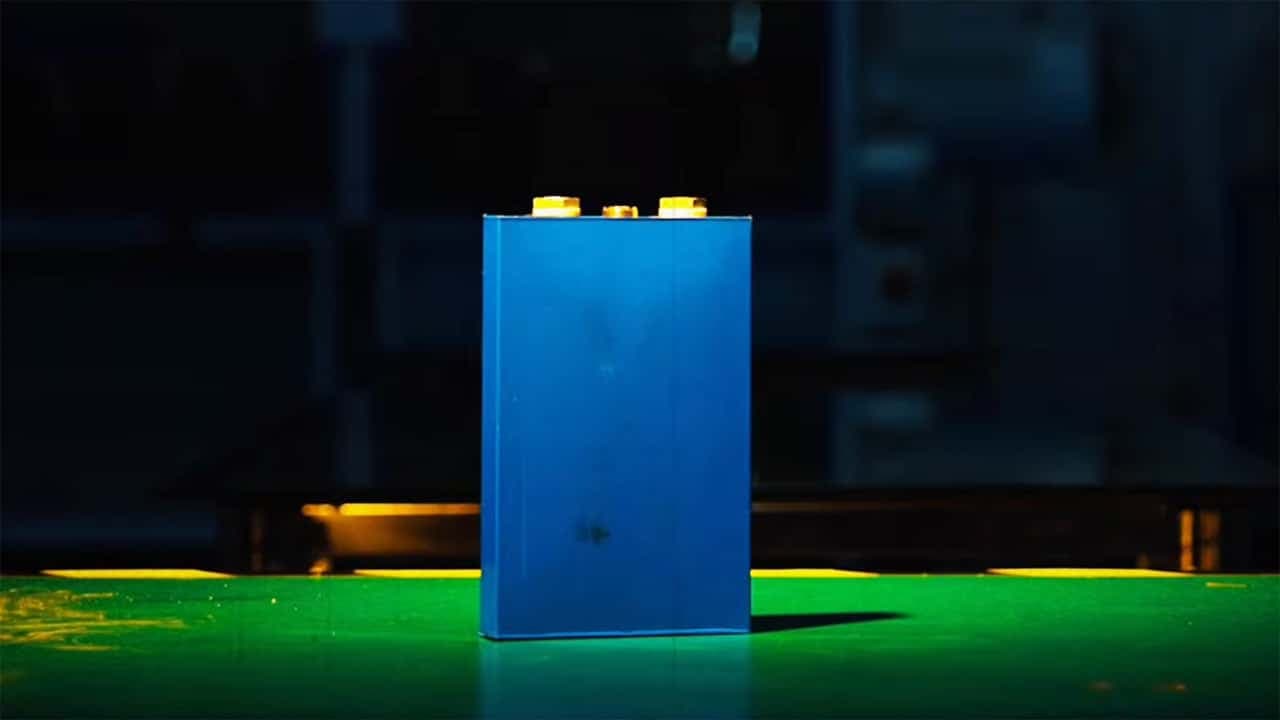
Following the decommissioning of the Zhangbei site, CATL researchers selected over 50 of the original LFP prismatic cells for rigorous laboratory evaluation. The goal was to inspect internal structural integrity and measure residual capacity. The findings were nothing short of impressive: the 14-year-old cells retained approximately 85% of their original capacity. This indicates that even after over a decade of heavy-duty industrial use, the modules are still viable for secondary energy storage roles, such as smaller grid-balancing units or off-grid storage setups, with an estimated 1,000 additional cycles remaining.
Microscopic analysis of the cells revealed that the internal architecture remained remarkably stable. The anodes and cathodes maintained near-perfect alignment, and researchers observed no significant signs of aging within the graphite components or failure in lithium intercalation. This structural preservation confirms that the LFP chemistry used by CATL is inherently stable and capable of withstanding the rigors of long-term, high-intensity cycling far better than many industry observers had previously predicted.
Why It Matters
- Longevity Benchmarks: Proving that LFP cells can survive 14 years of constant operation helps lower the total cost of ownership for both grid storage and EV fleet operators.
- Safety and Stability: The structural integrity of these cells demonstrates that LFP technology offers a robust, safer alternative to high-density chemistries, provided the specific energy needs of the application allow for its usage.
- Sustainability Through Utility: The ability to repurpose "worn" batteries for secondary storage significantly extends the lifecycle of battery materials, mitigating the environmental impact of disposal.
The Future of LFP Chemistry
The success of the Zhangbei cells reinforces why LFP batteries are becoming the preferred choice for manufacturers worldwide. While they may trade off some energy density compared to traditional nickel manganese cobalt (NMC) cells, their ability to withstand repeated deep cycling and their lower production costs make them an ideal candidate for a wide range of use cases. As automotive manufacturers in Western markets continue to integrate LFP packs into everything from entry-level commuter cars to heavy-duty pickups, the data from these 14-year-old cells acts as a foundational proof of concept.
As the industry moves toward circular economies, the prospect of "second-life" batteries becomes increasingly important. With the knowledge that a 14-year-old cell still possesses substantial utility, developers can begin designing modular energy storage systems that transition seamlessly from powering vehicles to stabilizing regional electrical grids. CATL’s findings serve as a massive vote of confidence for the longevity of our electrified future.