The Strategic Partnership
In a move to accelerate the electrification of the North American commercial vehicle market, global battery powerhouse LG Energy Solution has announced a non-binding memorandum of understanding (MoU) with the Massachusetts-based startup Indigotech. This collaboration marks a significant step toward the large-scale integration of advanced cylindrical battery cells into commercial vans, targeting a supply window from 2027 through 2030.
The agreement centers on the deployment of LG’s proprietary 46-series cylindrical NCM (nickel, cobalt, manganese) battery cells, which will power Indigotech’s upcoming Flow Ride and Flow Cargo platforms. By focusing on these specific vehicle segments, the two companies aim to address the critical needs of last-mile delivery and urban ride-hailing, sectors that have historically lagged in electrification due to durability and range concerns.
Technology and Performance Goals
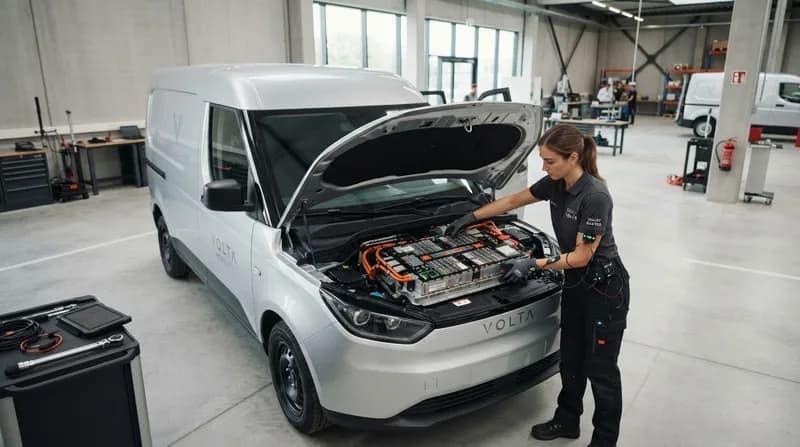
The core of this partnership lies in the synergy between Indigotech's specialized vehicle platforms and LG’s high-density battery engineering. The 46-series batteries are engineered to provide superior energy density and, crucially, rapid charging capabilities. These metrics are essential for commercial fleets where downtime represents a direct financial loss. By integrating these batteries directly into Indigotech's vehicle architecture, the companies aim to optimize range and thermal efficiency beyond current industry standards.
Indigotech, headquartered in the mobility hub of Woburn, Massachusetts, is not merely building hardware; it is creating a comprehensive ecosystem that bridges the gap between vehicle performance, charging infrastructure, and digital fleet management. The collaboration will involve extensive performance verification and technical integration to ensure that these commercial vans can handle the high-duty cycles required by modern logistics and TaaS (Transportation-as-a-Service) operators.
Why It Matters
- Market Expansion: For LG Energy Solution, this deal is a strategic push into the North American commercial vehicle space, diversifying its customer base beyond traditional passenger cars.
- Addressing Commercial Gaps: Current urban delivery vehicles often struggle with limited range and inefficient charging, forcing reliance on internal combustion engines. This partnership aims to prove that purpose-built, electrified vans can be economically viable for fleet operators.
- Technological Scaling: The 46-series cylindrical cell, which has already seen a 1.5x increase in shipments year-on-year, is becoming a cornerstone of LG’s strategy to dominate the high-performance battery market.
Future Outlook
As the electric vehicle sector shifts focus from luxury passenger models to the high-utility commercial segment, the requirement for reliable, durable, and fast-charging energy storage has never been greater. Will Graylin, CEO of Indigotech, noted that the current landscape is hindered by vehicles not purpose-built for the rigor of constant urban operation. By combining LG's manufacturing scale and battery chemistry expertise with Indigotech's specialized van designs, the venture hopes to provide a sustainable, cost-effective alternative that pushes gas-powered delivery fleets into obsolescence by the end of the decade.