The Evolution of Hydrogen Transit
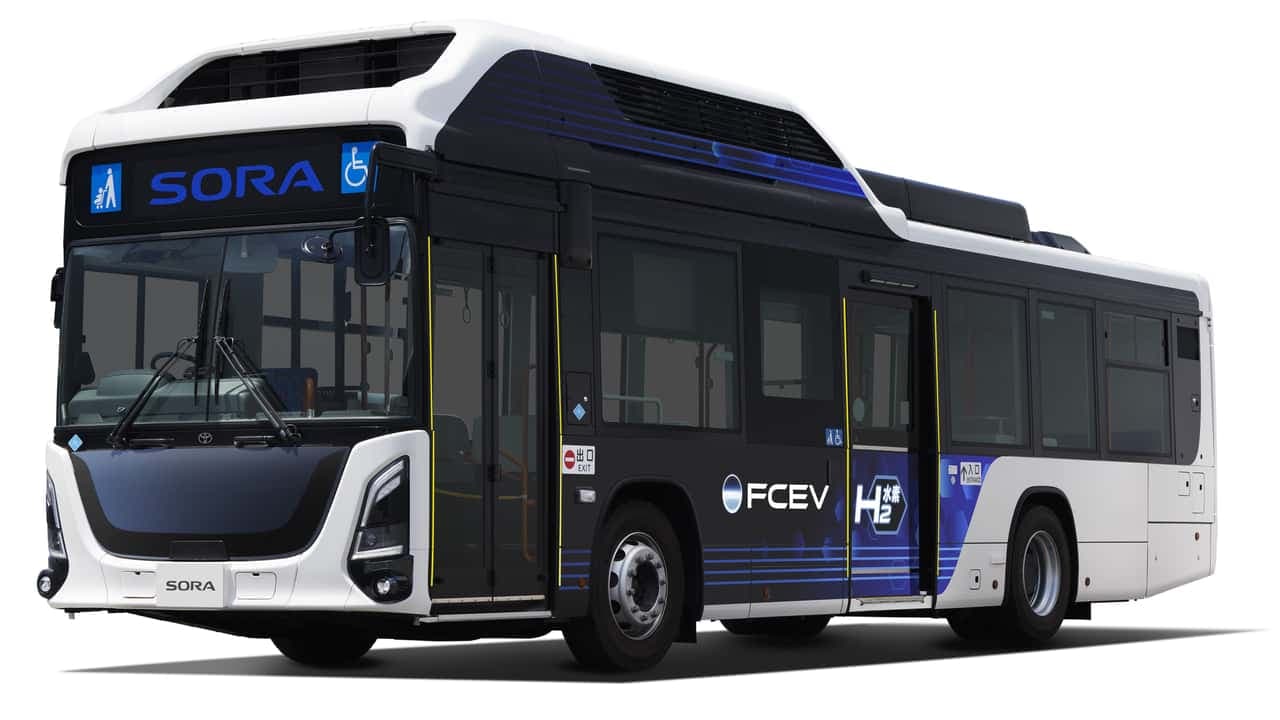
Toyota, in a strategic partnership with Isuzu, has officially unveiled the second-generation Sora hydrogen fuel cell (FCEV) bus. Set to begin production in the 2026 fiscal year, this latest iteration represents a significant leap forward in hydrogen-powered public transport. By leveraging a more efficient fuel cell stack and an advanced electric powertrain, the new Sora delivers a 50% increase in range compared to its predecessor, all while utilizing a more optimized storage configuration.
The vehicle is the result of a deep collaboration between industry giants. While Toyota provides the sophisticated roof-mounted fuel cell technology, the bus itself is built upon the chassis of the Isuzu ERGA EV. This cross-brand cooperation extends to the manufacturing stage, with J-Bus—a joint venture between Isuzu and Hino Motors—tasked with production at the Utsunomiya Plant in Tochigi, Japan.
Engineering Efficiency and Power
Under the hood, the new Sora is a powerhouse of electrified engineering. It features dual 110-kilowatt electric motors that provide a robust combined output of 295 horsepower and an impressive 715 pound-feet of torque. These motors draw energy from an 88-kilowatt-hour lithium-ion battery, allowing the vehicle to achieve a range exceeding 186 miles. The integration of a 113 kW fuel cell stack ensures that the bus can maintain this range efficiently, despite requiring less onboard hydrogen storage than the first-generation model.
Refueling capabilities remain a focal point for the transit industry. The current 471-liter tanks can be replenished in roughly ten minutes, but Toyota is already looking toward the future, suggesting that next-generation hydrogen filling stations will likely cut that time in half. This speed makes the Sora a highly practical solution for urban and regional operators who cannot afford long downtimes associated with traditional battery-electric vehicle charging.
Safety and Utility Features
Beyond its drivetrain, the 2026 Sora is packed with cutting-edge technology designed to enhance passenger safety and operational utility. To protect occupants, the bus includes an Emergency Driver Stop System (EDSS) and a Driver Status Monitor (DSM). These systems are designed to detect if a driver becomes incapacitated and can automatically bring the bus to a complete, safe stop to prevent accidents.
The interior design focuses heavily on inclusivity and flexibility. It features a fully flat floor and an optional one-touch securement system, greatly simplifying the boarding and seating process for wheelchair users. Furthermore, the vehicle serves as a mobile energy asset; it can export power from its high-voltage battery to serve as an emergency generator. In the event of a grid failure or natural disaster, the Sora can provide electricity to critical infrastructure, proving that its utility extends well beyond daily transit operations.
Technical Specifications
- Powertrain: Dual 110kW electric motors
- Total Output: 295 hp and 715 lb-ft torque
- Battery: 88 kWh lithium-ion
- Hydrogen Power: 113 kW fuel cell stack
- Range: Over 186 miles (300 km)
- Refueling Time: ~10 minutes
- Production Facility: J-Bus Utsunomiya Plant