A Dual-Action Therapeutic Strategy
In a promising development for oncology, researchers at the Oregon State University College of Pharmacy have unveiled a sophisticated nanoparticle-based therapy capable of addressing two critical medical challenges simultaneously: lung cancer tumor progression and cancer-induced cachexia. This secondary condition, characterized by severe muscle and adipose tissue wasting, is a frequent and often lethal complication for cancer patients, affecting up to 30% of cases.
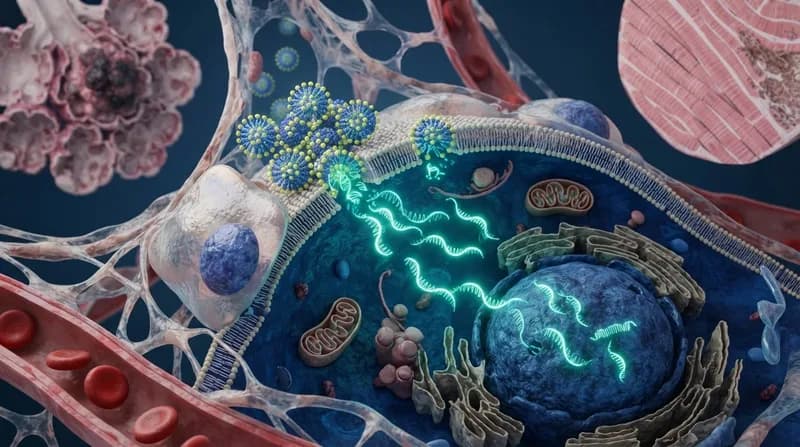
Led by Oleh Taratula and Yoon Tae Goo, the team utilized advanced lipid nanoparticles (LNPs) as a delivery vehicle for messenger RNA (mRNA). Unlike conventional drug delivery systems, this experimental approach leverages natural blood proteins to ensure precision. The LNPs are designed to bind with vitronectin, a protein found in human blood serum, which then guides the particles to interact with specific integrin receptors. Because these receptors are highly overexpressed on the surface of lung tumor cells, the nanoparticles can effectively home in on their target while avoiding the systemic off-target accumulation in the liver that has plagued many previous mRNA-based drug delivery efforts.
The Role of Follistatin in Cancer Recovery
The core of the therapeutic breakthrough lies in the payload: follistatin mRNA. Once the nanoparticles penetrate the tumor microenvironment, the mRNA instructs the cells to produce follistatin, a naturally occurring protein that plays a dual role in this context. Primarily, the induced follistatin acts to suppress the proliferation of the tumor cells, effectively reducing the overall tumor burden.
Simultaneously, the systemic expression of this protein directly combats the mechanisms of cachexia. In preclinical trials involving mice, subjects treated with this LNP system showed improved food intake, stabilized body weight, and preserved muscle mass. By tackling the disease from two angles—attacking the tumor while supporting physical resilience—the researchers aim to improve the quality of life and outcomes for patients who would otherwise suffer from rapid physical deterioration during cancer treatment.
Why it Matters
The implications of this research extend far beyond lung cancer. The ability to achieve targeted delivery via vitronectin-binding LNPs solves a significant hurdle in the field of genetic medicine: selectivity. By bypassing the liver, researchers can deliver higher concentrations of genetic material precisely where it is needed most, potentially reducing systemic toxicity and increasing therapeutic efficacy.
- Precision Delivery: Uses natural vitronectin proteins to bypass liver uptake, resulting in a 2.5-fold greater reduction in tumor burden compared to standard LNP methods.
- Dual-Efficacy: Successfully targets the cancer itself while reversing muscle wasting (cachexia) without observed adverse side effects in animal models.
- Future Potential: While currently in the preclinical stage, the successful demonstration of this mRNA-delivery mechanism opens doors for treating various other malignancies that exhibit similar receptor profiles.
The Path Toward Clinical Application
Although the initial findings are highly encouraging, the research team emphasizes that this treatment is currently confined to the preclinical research phase. The path toward human clinical trials requires rigorous safety assessments and further validation of long-term therapeutic effects. The research, which was supported by the National Cancer Institute and the National Research Foundation of Korea, sets the stage for a new generation of personalized, genetically-driven cancer therapies that consider the systemic health of the patient as much as the eradication of the tumor itself.