The Rise of Germany’s EV Incentive Program
Germany’s push toward widespread electric vehicle adoption has reached a significant inflection point. According to the latest data from the Federal Office for Economic Affairs and Export Control (BAFA), the government’s electric car subsidy program has officially surpassed 100,000 approved applications. This milestone represents a surge in activity, with approvals doubling in the span of a single month between September and October 2026. To date, over 430 million euros have been disbursed to help households transition to battery-electric and plug-in hybrid vehicles.
The program, which launched in May but covers applications retroactively to the start of the year, aims to democratize electric mobility. By scaling subsidies according to household income and family size, the initiative is successfully reaching the demographic it targeted: lower-to-middle-income earners. Data indicates that over 52 percent of all approved applicants fall into the lowest taxable income bracket, signaling that the barrier to entry for clean transportation is finally lowering for the average consumer.
1. Tesla Model Y
Tesla maintains a dominant grip on the German market, with the Model Y leading the charge as the most popular vehicle among subsidy recipients. With 8,297 approved applications, it sits comfortably at the top of the leaderboard. The Model Y continues to leverage its reputation for efficiency, software integration, and a mature charging infrastructure, making it a primary choice for families and commuters alike.
Its success is largely attributed to Tesla’s ability to scale production and offer competitive performance that appeals to a broad range of buyers. Even as new entrants crowd the market, the Model Y remains the benchmark against which other mid-sized electric SUVs are measured in the German subsidy statistics.
2. Skoda Elroq
Holding the second spot with 5,478 approvals is the Skoda Elroq. This model has seen rapid adoption, carving out a significant niche for itself as a practical, family-oriented alternative to more premium offerings. Skoda has successfully leveraged its integration into the broader Volkswagen Group ecosystem to provide a compelling value proposition that balances build quality with a more accessible price point.
The Elroq’s popularity highlights a shift in consumer behavior, where buyers are increasingly favoring established European manufacturers that offer versatile utility and consistent reliability. As Skoda continues to ramp up deliveries, the Elroq is expected to remain a critical pillar of the German EV market.
3. Tesla Model 3
The Tesla Model 3 holds the third position with 3,845 approved applications. Despite its age relative to the Model Y, the sedan remains a highly sought-after vehicle for those who prefer a lower profile and sportier driving dynamics. Its consistent popularity among subsidy applicants demonstrates the lasting appeal of Tesla’s core sedan design and the loyalty of the brand’s customer base.
By maintaining strong sales figures alongside its larger crossover sibling, Tesla effectively occupies two of the top three spots in the current funding rankings. This highlights the effectiveness of the Model 3’s frequent hardware and software updates, which continue to keep the vehicle competitive in an increasingly fragmented EV landscape.
Why It Matters
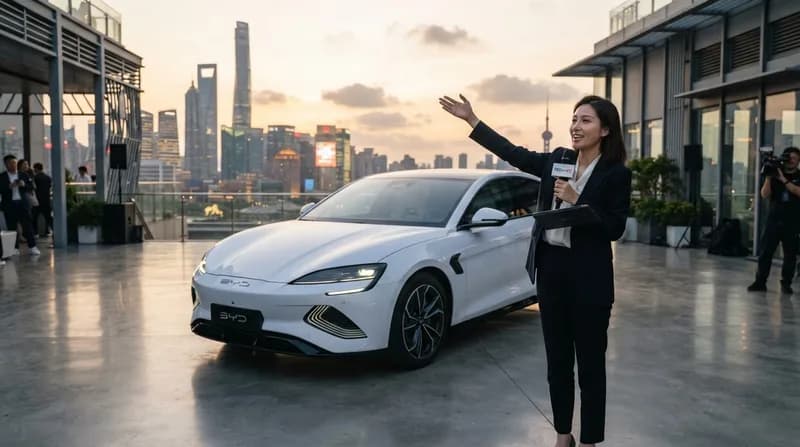
The success of the subsidy program goes beyond simple sales figures; it represents a strategic shift in European automotive energy policy. By prioritizing income-based incentives, Germany is attempting to neutralize the high initial purchase cost of EVs that has historically alienated lower-income households. Furthermore, the diversification of the top-ten list—which now includes rising stars like Leapmotor and BYD alongside traditional giants—illustrates that the German market is becoming a competitive battleground where price-to-performance ratios dictate success more than historical brand loyalty alone.