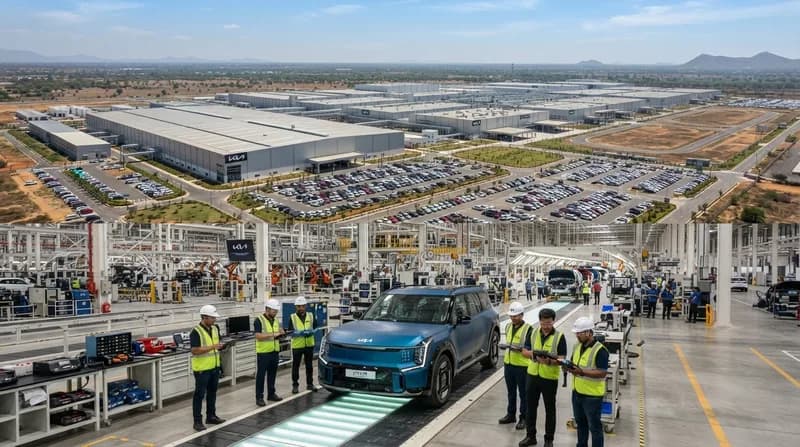
Expanding the Anantapur Hub
Kia has announced a major strategic investment of approximately €1.8 billion to establish a second manufacturing plant in Anantapur, Andhra Pradesh. This ambitious project aims to further solidify the South Korean automaker's position within the rapidly evolving Indian automotive market. By expanding its local footprint, Kia intends to significantly increase its total production capacity in the region, jumping from its current output of 400,000 units per year to a robust 600,000.
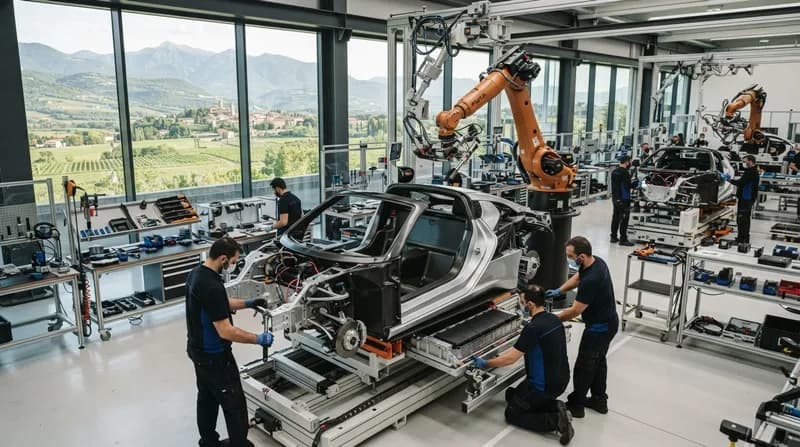
Spanning an impressive 188 hectares—a footprint comparable to over 250 football fields—the new facility will house full-scale manufacturing operations. This includes comprehensive stamping, welding, painting, and final assembly lines. The project is not just a win for the company’s supply chain; it is a major economic driver for the region, expected to generate approximately 12,000 new jobs spanning Kia’s internal operations and its broader network of service providers and component suppliers.
Strategic Focus: EVs and Global Reach
Scheduled to commence operations in 2030, the new plant is designed with flexibility at its core. Kia plans to utilize this space to manufacture a diverse mix of vehicles, balancing demand for traditional internal combustion engine (ICE) models with an aggressive push into the electric vehicle space. This duality reflects the company's commitment to transitioning its portfolio while catering to the immediate needs of the Indian consumer.
The expansion is also a clear signal of Kia's intent to treat India as a critical global export hub. By scaling up production, the manufacturer will gain the necessary velocity to serve both the domestic Indian market and international territories more efficiently. According to Kia India CEO Gwanggu Lee, this move is a testament to the trust consumers have placed in the brand since its initial entry into the Anantapur region in 2019, marking a pivotal new chapter for the company’s long-term growth ambitions.
Why It Matters
- Production Boost: Increasing total capacity by 200,000 vehicles annually by 2030.
- Dual-Track Strategy: The facility will accommodate both ICE and EV assembly lines, allowing the company to pivot based on market trends.
- Economic Impact: The project is slated to create 12,000 jobs, strengthening India’s role as a major automotive manufacturing destination.
- Sustainability Transition: Building on the 2025 launch of the Carens Clavis EV and the 2026 introduction of the Syros EV, this factory ensures that electrification remains central to Kia’s future production volume.