The Legal Clash Over Design Heritage
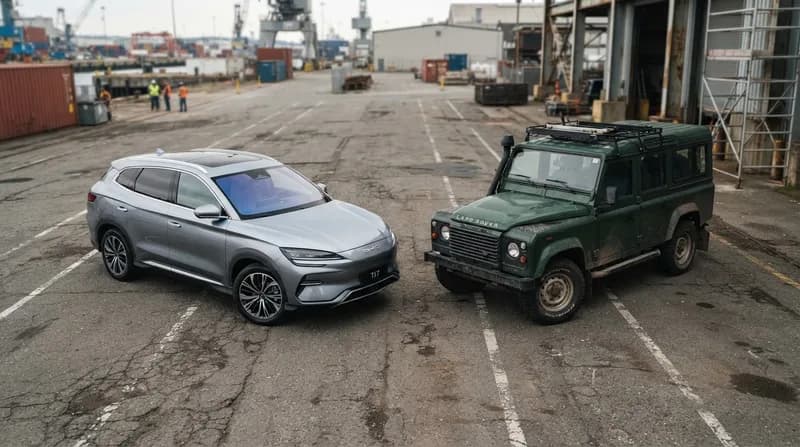
The automotive world is closely watching a high-stakes legal battle as British luxury icon JLR takes on Chinese electric vehicle giant BYD. At the heart of the dispute is the BYD Ti7, a rugged SUV that JLR claims draws far too much inspiration from its iconic Land Rover Defender. The tension reached a boiling point in August when court-appointed bailiffs raided BYD's offices in Schiedam and Hoofddorp, Netherlands, to seize digital evidence, specifically looking for proof that BYD had reverse-engineered the Defender to develop its own product.
However, the narrative took a sharp turn this month. A court in The Hague ruled that the evidence-gathering measures were disproportionate and unnecessary. The presiding judge ordered that the seized digital documents be destroyed, noting that JLR failed to establish that the raid was essential for proving design infringement. In a stinging rebuke to the British automaker, the court also ordered JLR to reimburse BYD for nearly 25,400 euros in legal costs, while threatening JLR with massive fines if they do not comply with the destruction of the seized materials. Crucially, the court emphasized that because the Ti7 is not yet sold in the European Union, there is currently no tangible economic harm to substantiate such invasive discovery measures.
The BYD Ti7: A Rising Challenger
Available in China under the Fang Cheng Bao brand since September 2025, the BYD Ti7 has quickly become a standout performer in the Chinese market. Visually, the vehicle is characterized by a bold, angular aesthetic, an upright front fascia, and pronounced square wheel arches—features that have sparked the ire of Land Rover purists. While the legal merits remain to be decided in separate, ongoing copyright and design-right proceedings, the vehicle itself is positioning itself as a disruptive force in the premium SUV segment.
Technical specifications for the upcoming UK market launch, scheduled for January 2027, suggest a potent plug-in hybrid powertrain. The system pairs a 1.5-litre turbocharged petrol engine with high-output electric motors, delivering a total system output of 300 kW. To appeal to practical buyers, the vehicle will debut as a seven-seater. Energy is managed by a 35.6-kWh battery pack, providing an estimated 119 kilometres of electric-only range under the WLTP cycle. With a starting price of £47,995, it significantly undercuts the £68,465 entry point for a seven-seat Land Rover Defender 110, setting the stage for a fierce battle between legacy prestige and high-tech affordability.
Context: JLR’s History of Protectionism
This is not JLR’s first foray into aggressive litigation to protect its intellectual property. In 2019, the company successfully navigated a legal dispute against Jiangling Motor regarding the Landwind X7, which featured a striking resemblance to the Range Rover Evoque. JLR’s approach to the Chinese market is nuanced, however. While they fight competitors in court, they also maintain deep industrial ties within the country, most notably through their long-standing partnership with Chery.
This joint venture, known as CJLR, has invested heavily in local R&D, including a massive EV production hub in Changshu. JLR has even gone so far as to leverage Chery’s electric platforms for its own future sub-brand, Freelander. This illustrates the complex duality of modern automotive globalization: manufacturers are simultaneously competing with, suing, and collaborating with their international rivals to secure a foothold in the competitive electric mobility landscape.
Why It Matters
- Design Protection: The outcome of the ongoing design-rights lawsuit will set a precedent for how much "inspiration" is legally permissible in the global EV arms race.
- Market Entry Hurdles: By targeting the Netherlands for legal action, JLR is signaling an intent to block or complicate the European rollout of Chinese-manufactured SUVs that mimic established design languages.
- The Hybrid Advantage: With a 300 kW output and a sub-£50k price point, the Ti7 represents the exact type of vehicle that threatens the margins of European legacy automakers in the premium segment.