The Emergence of Ampstar
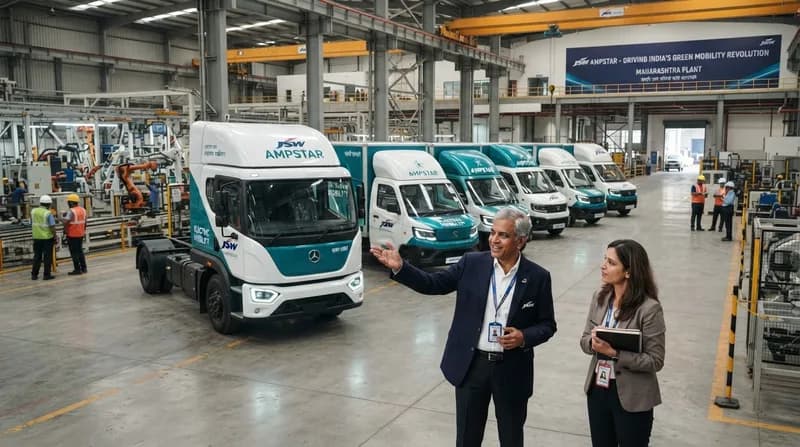
The Indian commercial vehicle sector is witnessing a significant transformation with the introduction of Ampstar, a new electric vehicle brand under the umbrella of JSW Greentech. As a subsidiary of the industrial giant JSW Group, the new entity is positioning itself to be a major player in the transition to sustainable logistics and mass transit. With a heavy emphasis on domestic development, Ampstar is rolling out a diverse portfolio of electric buses and trucks tailored specifically for the unique demands of the Indian market.
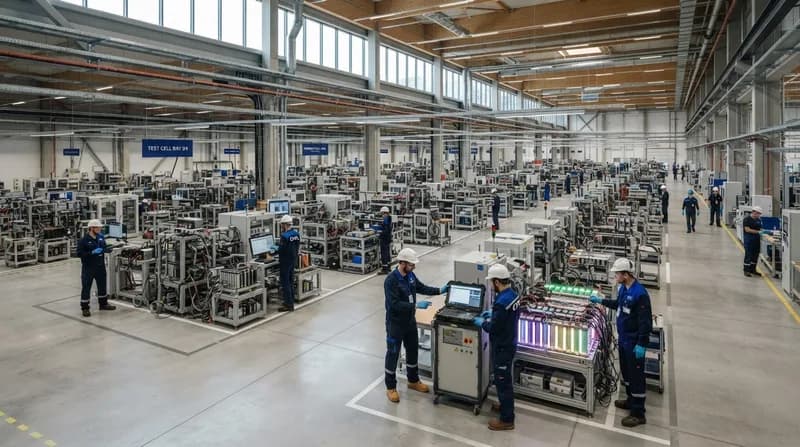
To support this ambitious rollout, the company has established a massive 90-acre greenfield manufacturing facility in Chhatrapati Sambhajinagar, Maharashtra. This plant currently boasts an annual production capacity of 15,000 units, with the flexibility to shift production ratios between buses and trucks based on market demand. The facility is designed for scalability, with a clear roadmap to increase output to 25,000 units annually as the brand matures.
Technological Self-Reliance
JSW Greentech has funneled approximately 25 billion rupees (around €229 million) into its electric commercial vehicle venture, with a strategic focus on in-house engineering. Rather than relying heavily on imported components, the company has developed its own vehicle platform, vehicle control units (VCU), and integrated drivetrain software. This proprietary approach includes a sophisticated four-in-one unit that manages power distribution, DC-DC conversion, and inverter drives for steering and air compression.
The company is aggressively pursuing supply chain independence. CEO Sumit Mittal has outlined a roadmap that aims for 50 percent localization within the first six months, eventually scaling to 75 percent within a year. By controlling the underlying software and base logic of its drivetrains, Ampstar intends to maintain lower operational costs and greater flexibility in its product design, ensuring these vehicles can withstand the rigorous duty cycles typical of Indian commercial transport.
Flexible Mobility Solutions
Recognizing the diverse financial needs of fleet operators, Ampstar is moving away from traditional sales models. The company plans to offer a comprehensive suite of ownership options, including direct purchase, leasing, and 'Battery as a Service' (BaaS) models. For heavy-duty operators, they are even introducing usage-based payment structures, such as charging per tonne of freight for trucks or per kilometer for bus fleets.
Flagship Electric Bus Range
The initial product lineup covers a broad spectrum of transit needs, with bus sizes ranging from 7 to 18 meters. Leading the charge are a nine-meter city bus, a 12-meter city bus, and a 12-meter staff transport model. The 12-meter staff variant stands out with a robust 302 kWh LFP battery pack that utilizes dual-gun CCS2 charging to minimize downtime. Engineered for performance, this model is capable of navigating 18-percent gradients and reaching top speeds of 80 km/h. Inside, the focus is on passenger comfort and safety, featuring air suspension, a 360-degree camera monitoring system, onboard USB charging, and integrated ADAS (Advanced Driver Assistance Systems) to enhance road safety for operators and passengers alike.