The Evolution of Freight Electrification
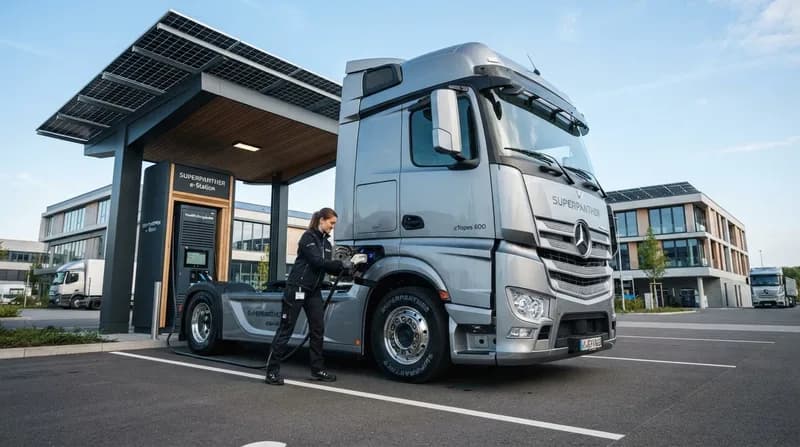
When the 'Transportation in Charge' (TiC) research initiative began in 2023, the prospect of heavy-duty, long-haul electric trucking was largely theoretical. Germany’s major manufacturers had yet to bring their 600 kWh battery-electric titans to market. Now, three years later, as the project concludes, the landscape has transformed significantly. The Fraunhofer Institute for Manufacturing Technology and Advanced Materials (IFAM) has utilized this window to document the practical realities of charging heavy logistics fleets, emphasizing that moving away from isolated operations is essential for industry-wide success.
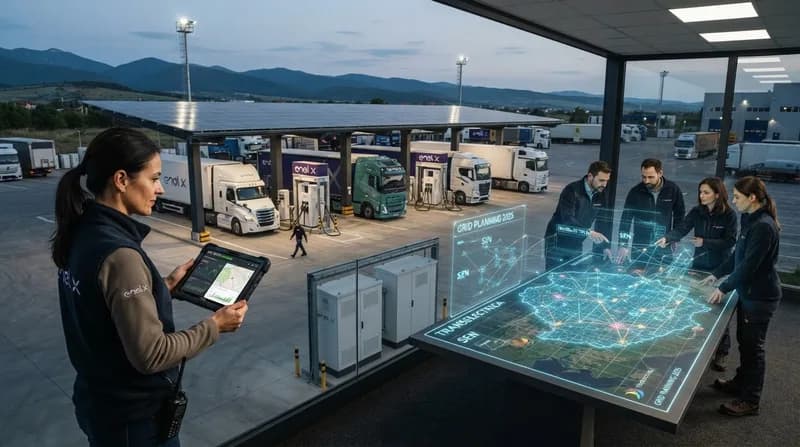
The study highlights that industrial estates and logistics hubs act as natural powerhouses for the energy transition. By concentrating charging infrastructure where trucks already dwell for loading, unloading, or overnight storage, companies can sidestep the inconsistencies of public charging networks. However, this transition is not as simple as installing plug-in points. The TiC project warns that success requires a shift toward viewing these estates as holistic, interconnected energy systems rather than isolated corporate depots.
The Grid Connection Bottleneck
One of the most persistent hurdles identified by the researchers is the state of existing electrical grid connections. High-powered charging infrastructure for heavy trucks is inherently demanding, and without a robust medium-voltage connection, most sites cannot support ultra-fast charging without relying heavily on secondary investments like onsite photovoltaic arrays and stationary battery storage systems.
The findings place a direct responsibility on local grid operators to scale infrastructure in alignment with logistics growth. According to project leaders Sönke Stührmann and Karl Glökler, companies cannot simply purchase an electric fleet and expect to plug them in; fleet electrification must be treated as a strategic project that begins with grid capacity assessments. Technical solutions alone will not suffice; the researchers advocate for early and coordinated communication between logistics firms, municipalities, and power providers to avoid expensive development delays.
Shared Infrastructure as a Financial Lever
Perhaps the most significant takeaway from the TiC initiative is the push for shared charging models. By allowing multiple stakeholders within an industrial estate to share infrastructure, companies can drastically reduce their individual capital expenditure (CAPEX) while simultaneously easing the strain on the regional power grid. This cooperative approach serves as a critical financial tool to make electric trucks competitive against their diesel counterparts.
Data from the study offers a compelling economic argument: a fleet of ten electric trucks can achieve significant cost savings when the operator acts as an energy provider. In a base scenario, the study calculated a total cost of ownership of approximately €352,859 over five years per vehicle. By incorporating third-party electricity sales into their business model, operators can lower these costs to roughly €336,903, effectively accelerating the break-even point against traditional diesel trucks. The researchers note that if charging costs can be kept around 30 cents per kilowatt-hour, electric heavy-duty vehicles reach economic parity with diesel even without external sales, proving that the technology is already mature enough for mass deployment.
Why It Matters
- Operational Efficiency: Shifting to depot-based, shared charging reduces reliance on potentially unreliable public charging infrastructure.
- Economic Parity: Shared infrastructure and optimized energy management are the primary drivers in making e-trucks cheaper than diesel over a typical vehicle lifecycle.
- Collaborative Infrastructure: Successful electrification depends on multi-party agreements, clear legal frameworks, and transparency between logistics companies sharing space in industrial hubs.