A Strategic Shift in European Automotive Policy
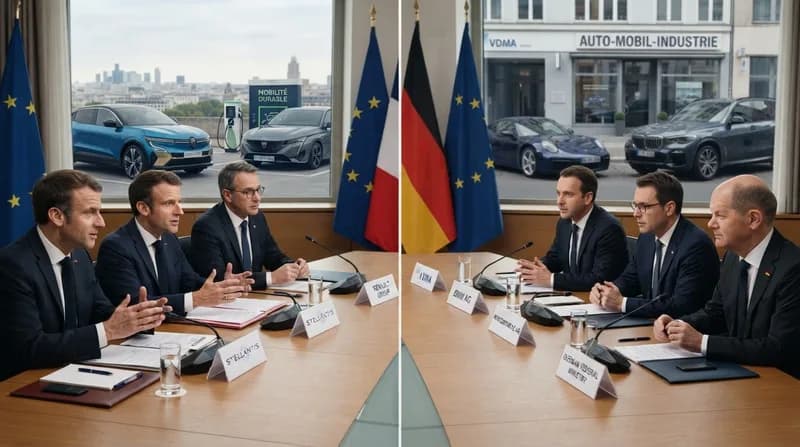
In a move that promises to reshape the future of the European automotive sector, German Chancellor Friedrich Merz and French President Emmanuel Macron have reportedly reached a critical agreement on the European Union's emissions landscape. For months, the two nations held divergent views on how to manage the transition away from internal combustion engines. Now, they appear to have struck a deal: France is signaling a willingness to back a more lenient approach to fleet CO2 targets, while Germany is prepared to concede on stricter 'Made in EU' industrial manufacturing requirements.
This political alignment arrives as the automotive industry grapples with the fallout of the original 2035 ban. EU diplomats suggest that while the legislative fine print is still being ironed out, the broad strokes of this Franco-German pact are set to influence the forthcoming 'Auto Package'—a legislative framework designed to prevent a structural crisis within the bloc's car manufacturers.
Expanding Flexibility for Automakers
The core of the proposed changes involves a significant relaxation of the fleet emission targets. While the European Commission had already moved toward a 90% reduction target by 2035, the Franco-German proposal seeks to go further. Under the current negotiation, the countries are pushing for a 10-percentage-point softening without mandatory compensation. Should further compensatory measures be factored in, such as the use of carbon-neutral fuels or sustainable manufacturing processes, the effective reduction requirement could fall to 80%, providing a much wider safety net for manufacturers to continue selling internal combustion engine vehicles well past the initial 2035 deadline.
This flexibility also extends to the 2030 interim targets. To avoid the threat of looming financial penalties, the two leaders are proposing a transition period. Instead of rigid annual compliance for 2030, the new proposal would stretch the compliance horizon to a three-to-five-year window (2028–2032). This creates a more manageable glide path, allowing manufacturers to pivot their production cycles without triggering the immediate, heavy fines that many feared would cripple investment in new technology.
Why it Matters: Balancing Industrial Survival and Green Goals
- Economic Preservation: The policy pivot is a direct response to the automotive industry's warnings that the previous, uncompromising ban would exacerbate existing market volatility and threaten jobs.
- Industrial Sovereignty: By supporting stricter 'Made in EU' rules, France secures a victory in shielding the regional industrial base from cheaper, non-European imports, specifically concerning the sourcing of steel and components.
- Small EV Incentives: The 'Auto Package' includes 'Super Credits' for small electric vehicles, effectively weighting cars under 4.20 meters more heavily in fleet calculations to encourage the development of accessible, affordable urban transport.
- Compensatory Credits: New rules allow manufacturers to offset residual emissions using green steel and climate-neutral e-fuels, provided they can scale these technologies sufficiently by the middle of the next decade.
The Road to Parliamentary Ratification
The legislative journey is far from over. A critical vote by the European Parliament’s Transport Committee, initially slated for early October, has been pushed back as political factions on the Centre Platform refine the details of the agreement. The goal is to reach a plenary vote by November. Approval will require both a parliamentary majority and a qualified majority in the EU Council—meaning 15 member states representing at least 65% of the EU’s population must give their consent.
While this proposal seeks to mollify the industry, it creates a complex regulatory environment. The success of these targets will ultimately hinge on the cost and availability of carbon-neutral fuels and green steel by 2035. As the legislative dust settles, the focus remains on ensuring that European manufacturers have the financial stability to remain competitive while still advancing the bloc's broader environmental objectives.