The Disrupt 2026 Experience
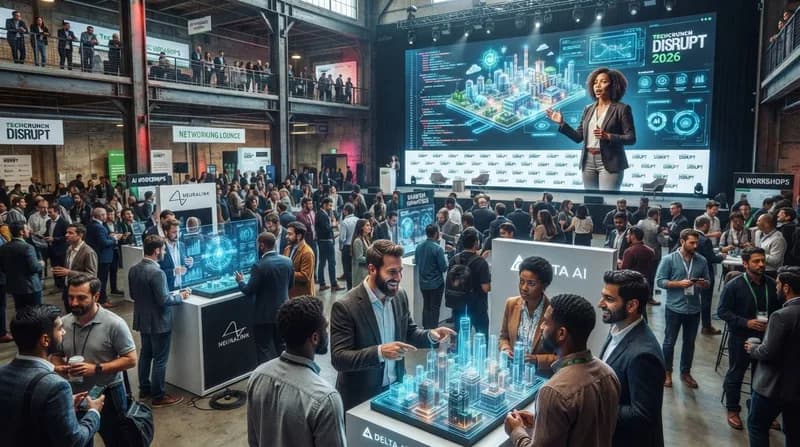
TechCrunch Disrupt 2026 is returning to San Francisco's Moscone West from October 13-15, positioning itself as the premier gathering for more than 10,000 founders, investors, and industry operators. While the main stages provide high-level insights, the heart of this year’s event lies in its curated breakout sessions. These 50-minute, intimate gatherings are designed to bypass surface-level observations, allowing attendees to engage directly with experts on the granular challenges defining the current tech landscape.
With capacity limited and access managed on a first-come, first-served basis, these sessions are structured to address the "how-to" of modern entrepreneurship. Whether it is navigating the transition from model training to inference, mastering the complexities of the fundraising process, or understanding the practical application of AI agents, the agenda serves as a tactical roadmap for attendees looking to translate strategy into immediate execution.
What Is Physical AI?
In a session led by SOSV HAX’s Susan Schofer and Duncan Turner, the focus shifts toward the intersection of artificial intelligence and physical hardware. As AI matures, the industry is increasingly focused on machines that must perceive, reason, and act within unpredictable real-world environments. This breakout session will demystify the "Physical AI" category, offering a deep dive into the unique playbooks required to build hardware-centric AI and identifying the specific indicators investors look for when evaluating companies in this space.
The Inference Economy
As frontier model development becomes increasingly commoditized, the financial center of gravity is shifting from training infrastructure to the inference layer. Cerebras Systems’ Hagay Lupesko and Glasswing Ventures’ Rudina Seseri will explore this transition, discussing how companies can build defensibility when the underlying model is no longer a proprietary advantage. The conversation will center on the rising importance of latency as a product feature and the fundamental changes occurring in startup economics and infrastructure investment strategies.
Agentic Workflows in Practice
Anthropic’s Steve Androulakis and Sachin Malhotra are set to provide a rare, behind-the-scenes look at how developers who build AI for a living actually integrate it into their daily operations. This session will move beyond theoretical benefits to examine the reality of running multiple Claude agents in parallel. Participants will learn how to delegate complex engineering tasks, audit agentic output, and implement recovery protocols when systems fail—providing a blueprint for anyone looking to incorporate AI agents into their own technical teams.
Building the Growth Engine
Patrick Burke of Hostinger will lead a session focused on scaling in the age of AI. The presentation examines how startups can leverage AI to accelerate market entry, identify underpriced distribution channels, and tighten the feedback loop between market signals and product launches. By utilizing agentic marketing workflows, startups can effectively build a growth engine that allows them to experiment faster and act more decisively than competitors tethered to traditional, slower-moving methodologies.
Why it Matters
- Tactical Depth: The shift from general keynote addresses to 50-minute specialized breakout sessions allows founders to troubleshoot specific operational hurdles.
- Market Economics: The emphasis on the "Inference Economy" signals a broader industry pivot toward latency and deployment, moving away from the training-heavy narrative of previous years.
- Hardware Integration: Dedicated sessions on Physical AI acknowledge that the next phase of innovation lies in hardware that can navigate the messy reality of the physical world.