Bringing Molecular Biology to the Browser
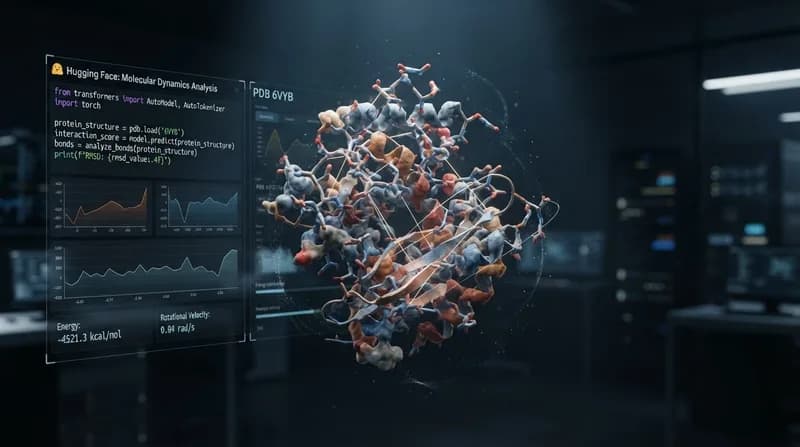
Hugging Face continues to bridge the gap between machine learning and scientific discovery with its latest integration: support for 3dmol.js within its Spaces platform. By incorporating this library, the company provides developers and researchers with a seamless, browser-based environment to render complex 3D molecular structures directly inside their applications. This update eliminates the need for cumbersome desktop software when analyzing protein-folding outputs or chemical compounds.
Empowering Scientific Workflows
The addition is particularly significant for the bioinformatics community. Traditionally, interacting with PDB files or complex protein models required specialized, high-performance local applications. By leveraging 3dmol.js, Hugging Face users can now visualize, rotate, and analyze molecular geometries with high fidelity directly through the cloud. This facilitates easier collaboration, as interactive models can now be shared instantly via a simple URL rather than forcing team members to manage local installations of visualization tools.
Why It Matters
- Accessibility: Lowers the barrier to entry for visualizing cutting-edge generative protein models.
- Workflow Efficiency: Integrated visualization allows for rapid validation of machine learning outputs within the same environment where they are generated.
- Interactivity: Native web support ensures that molecular models are dynamic and responsive across devices, moving away from static 2D snapshots.
For those working at the intersection of AI and structural biology, this integration represents a meaningful step toward making advanced research tools more open and accessible. By providing these native rendering capabilities, Hugging Face is positioning itself not just as a repository for model weights, but as a comprehensive platform for the entire scientific AI lifecycle. Researchers can now host their models, run inference pipelines, and display the resulting 3D protein structures without ever leaving the browser environment. As AI-driven protein structure prediction continues to evolve, these embedded visualization tools will be critical for interpreting results in real time.