A New Engine for Energy Innovation
The Fraunhofer-Gesellschaft has officially inaugurated the Center for Energy Storage and Systems (ZESS) in Braunschweig, marking a significant milestone in Germany’s push for leadership in next-generation energy storage. Backed by a joint investment of nearly €50 million from the federal government and the state of Lower Saxony, this state-of-the-art facility is dedicated to bridging the gap between fundamental laboratory research and real-world industrial application. By consolidating the expertise of three major Fraunhofer institutes—IST, IFAM, and IKTS—the center aims to accelerate the commercialization of solid-state batteries and hydrogen-based technologies.
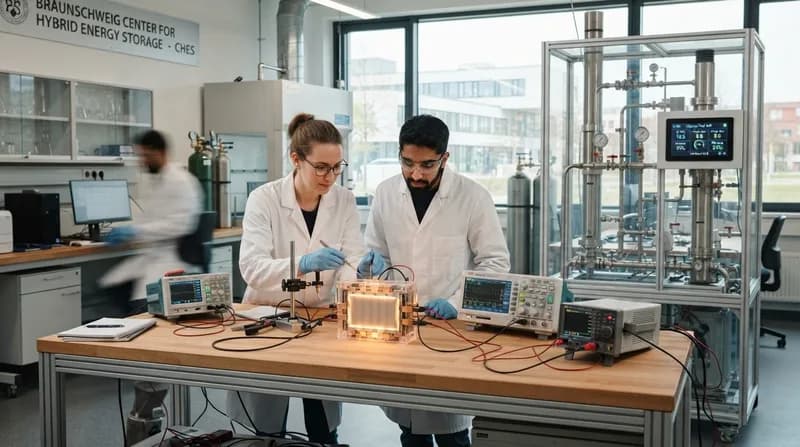
Spanning 3,300 square meters, the facility is purpose-built to handle the complexities of future energy tech. It features 1,750 square meters of high-tech laboratory space, complemented by a 450-square-meter specialized dry room. These facilities allow researchers to experiment with sensitive materials required for next-generation battery chemistries. Beyond the raw output of research, the center is designed to address the entire process chain—from material science and manufacturing methodology to sustainability and the circular economy.
Why it Matters: The Path to Industrial Scale
The ZESS serves as a critical link in Germany’s broader energy research ecosystem. While existing hubs like the FFB in Münster focus on near-series production scaling, ZESS provides the specialized environment needed to innovate on the chemistry and component level, particularly for solid-state batteries. Its close integration with TU Braunschweig further strengthens the regional network, creating a continuous loop of academic discovery and industrial technology transfer.
Technical Infrastructure & Sustainability Features
- Building Composition: Utilizes an innovative wood-hybrid structure to minimize the carbon footprint associated with traditional concrete usage.
- Energy Efficiency: Features integrated photovoltaic systems on both the roof and façade, alongside green roof technology to reduce energy demand.
- Research Scope: Focuses heavily on the full life-cycle, encompassing material testing, cell assembly, and recycling protocols.
- Strategic Collaboration: Acts as a collaborative bridge between three major Fraunhofer institutes, ensuring a multidisciplinary approach to hydrogen and battery systems.
The center’s launch comes at a time when global competition for battery dominance is heating up, with Fraunhofer simultaneously expanding international partnerships in South Korea. By focusing on both solid-state battery development and the hydrogen economy, the ZESS is positioning itself as a cornerstone of European green technology. This facility isn't just about creating a more efficient battery; it’s about creating a robust, sustainable industrial framework that can be exported globally as the energy transition reaches a critical tipping point.