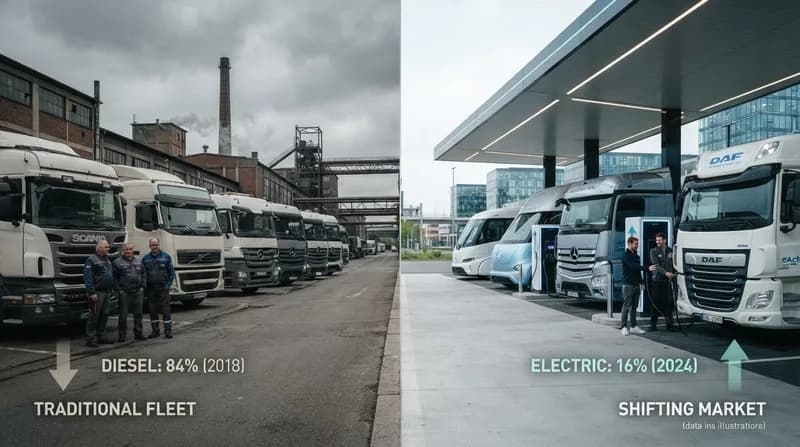
The Looming Shift in Heavy Transport
The European heavy-duty vehicle market, long dominated by a familiar cohort of domestic heavyweights—including Volvo, Daimler Truck, Traton, Iveco, and DAF—is bracing for a structural disruption. A recent report by Transport & Environment (T&E) indicates that the transition to electric mobility is not merely an environmental imperative but a commercial battleground. If local manufacturers fail to accelerate their electrification timelines, they could surrender up to 25% of the electric truck market to aggressive new players arriving from China and the United States within the next five years.
The study highlights that while the current market share of electric trucks in Europe remains modest, the rate of adoption is accelerating. This window of rapid growth presents an opening for external entrants, many of whom have honed their manufacturing capabilities in more mature electric vehicle ecosystems abroad.
The Competitive Landscape: Chinese Entrants
A wave of Chinese manufacturers is preparing to make a significant splash at the upcoming IAA Transportation trade fair. Companies such as Sany, Sinotruk, Foton, FAW Trucks, and SuperPanther are actively positioning themselves to capture European market share. These firms bring a dual advantage: years of industrial experience in heavy-duty manufacturing combined with the specialized technological expertise derived from China’s highly developed domestic electric truck sector.
According to T&E, these new entrants are not just competing on availability; they are matching European standards for performance. Metrics such as charging speeds, payload capacity, energy efficiency, and total operational range are now on par with traditional European offerings, stripping away the performance-based competitive moat that domestic incumbents previously relied upon.
The Atlantic Challenger: Tesla’s Expansion
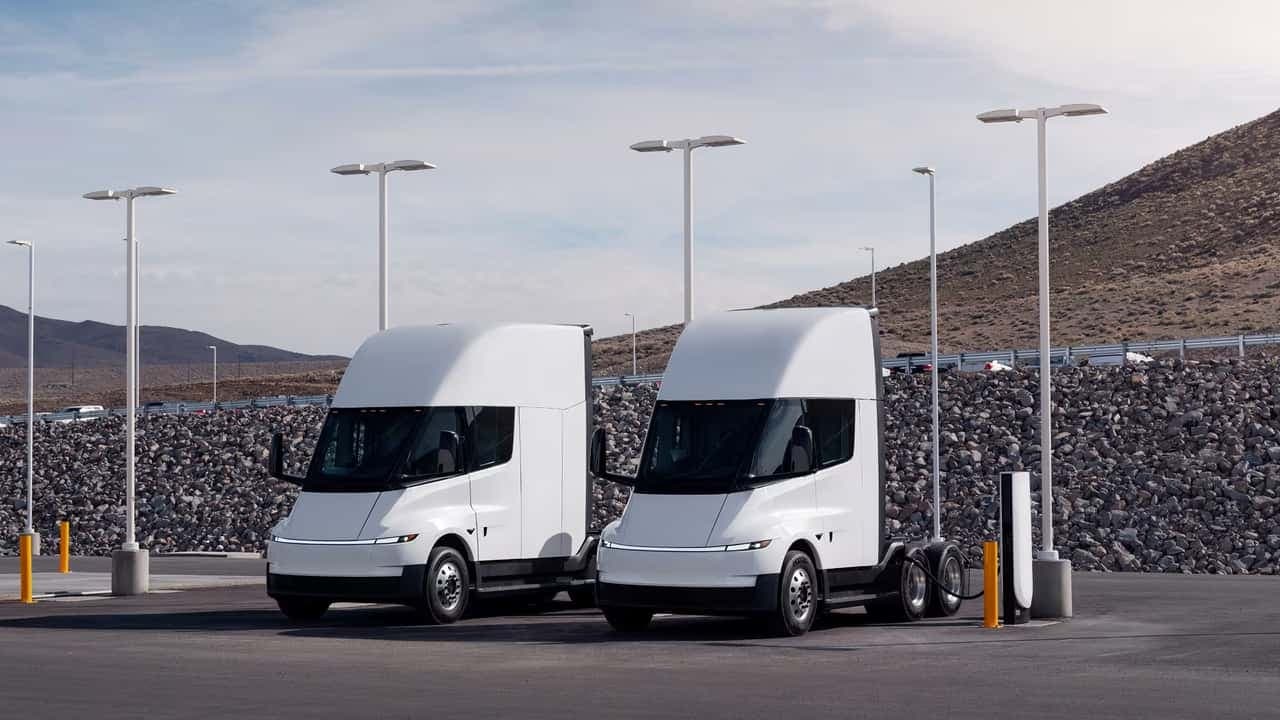
From the United States, Tesla remains a major variable in the European equation. With the company signaling serious expansion plans for its electric Semi, the market is poised for a significant disruption in the long-haul sector. While the lack of final European-specific technical documentation and pricing makes direct modeling difficult, the presence of a vertically integrated technology giant with extensive experience in energy storage systems poses a credible threat to the status quo.
Why It Matters: Total Cost of Ownership
The core of the competition rests on the bottom line. Transport operators, who typically work with razor-thin profit margins of 1.5% to 2%, are hyper-sensitive to the Total Cost of Ownership (TCO). The T&E report suggests that Chinese electric trucks could potentially offer a TCO reduction of up to 12% compared to European counterparts.
- Operational Savings: Potential savings of approximately €43,000 over a five-year period.
- Cost Efficiency: Reductions in operational costs per kilometer from €0.63 to €0.55.
- Strategic Impact: Even a minor, consistent cost advantage can trigger a massive shift in procurement strategies for logistics firms looking to protect their margins.
Outlook and Strategic Implications
T&E’s analysis serves as a clear warning to both corporate leaders and EU policymakers. To avoid a repeat of the struggles seen in the passenger car sector, the report urges European manufacturers to embrace ambitious CO2 fleet emission standards rather than lobby for their relaxation. The current transition is described as a critical juncture; failure to scale production and reduce costs now will likely pave the way for international rivals to cement their influence in the European logistics chain.
For the logistics industry, this intensified competition is a potential windfall, offering better technology at lower price points. However, for established European brands, the mandate is clear: the pace of electrification must match the velocity of global competition, or they risk losing their grip on the heavy-duty sector entirely.