The Path to Mass Production
DeepDrive, the Munich-based engineering startup known for its disruptive approach to electric vehicle propulsion, has officially moved from the testing phase into the industrial big leagues. The company recently announced that it has been selected as a Tier-1 supplier for a major, yet-to-be-named global automotive manufacturer. This nomination secures the company a place in mass production starting in 2028, signaling a transformative shift from a research-driven startup to a global components supplier.
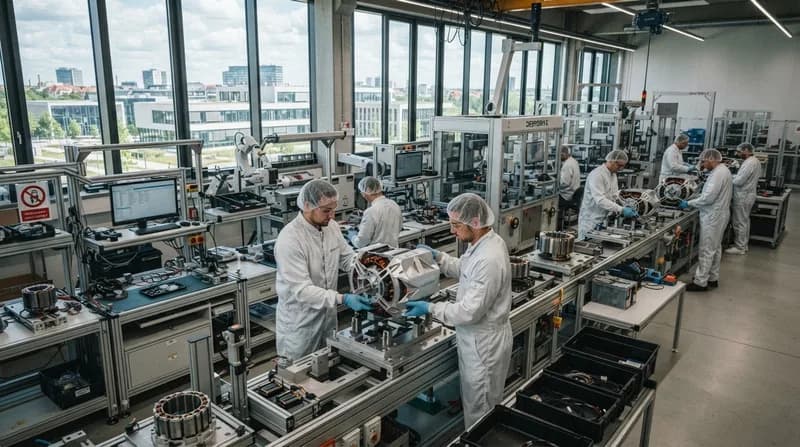
While the identity of the automaker remains under wraps, the deal represents a significant validation of DeepDrive’s technology. The startup, which boasts backing from major industry players like BMW i Ventures and Volkswagen-linked Leitmotif, has spent years refining its unique motor architecture. With the validation phase now complete, the focus for the organization has shifted to scaling manufacturing capabilities to handle the substantial volume requirements of a modern global automaker.
The Tech: Dual-Rotor Radial Flux Innovation
At the heart of this deal is DeepDrive’s proprietary dual-rotor radial flux motor architecture. Unlike conventional electric motors, this design places the stator directly between an inner and an outer rotor. This configuration provides a distinct advantage in terms of torque density, allowing for a more compact and lightweight motor that does not sacrifice power output. By maximizing the utilization of the magnetic field, DeepDrive claims their motors are significantly more efficient than standard designs.
The versatility of this technology is one of its most attractive features for manufacturers. DeepDrive has engineered the architecture to be highly adaptable, with the platform capable of serving three distinct automotive roles: as a central drive unit, as a wheel-hub motor, or as a power-dense generator. By simplifying the drivetrain assembly, this modular approach has the potential to reduce overall vehicle weight and lower the total cost of production, addressing some of the most critical challenges in current EV engineering.
Why It Matters
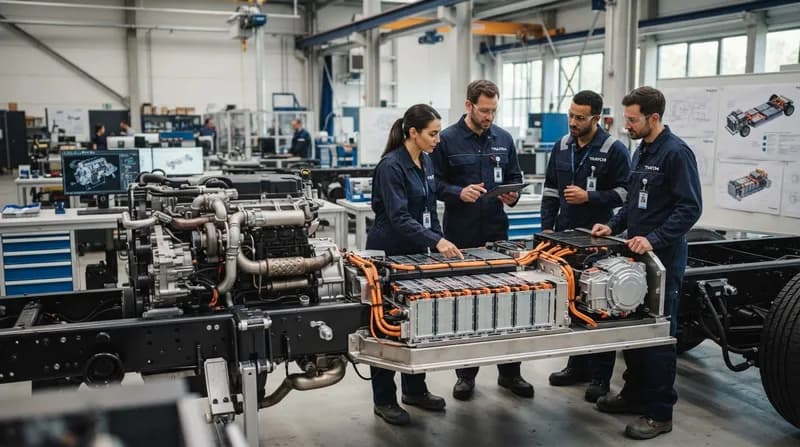
The transition from a prototype to a high-volume product is the most dangerous "valley of death" for hardware startups. By bringing on advisors like Peter Hochholdinger—a veteran who oversaw production scaling at both Tesla and Lucid—DeepDrive is clearly prioritizing the manufacturing hurdle. The company is actively restructuring its organization to support the rigors of high-volume delivery, ensuring that the performance gains demonstrated in the lab carry over to the assembly line.
Global Ambitions and the China Expansion
Beyond the European contract, DeepDrive is setting its sights on the East. The company has announced the establishment of a dedicated team in Shanghai to spearhead sales and project implementation within the Chinese market. This move aligns with a broader "local for local" strategy, where the company aims to establish development and manufacturing footprints in the regions where their clients operate.
CEO Felix Poernbacher views this expansion as a logical step, noting that China represents the most dynamic automotive landscape in the world today. By embedding itself directly into the Chinese ecosystem, DeepDrive aims to provide localized support for its global partners, solidifying its presence as a key player in the next generation of electric mobility. As the 2028 production start date approaches, the industry will be watching to see how successfully this innovative motor design integrates into the high-speed, high-stakes world of automotive manufacturing.