A Violent History Beneath the Ice
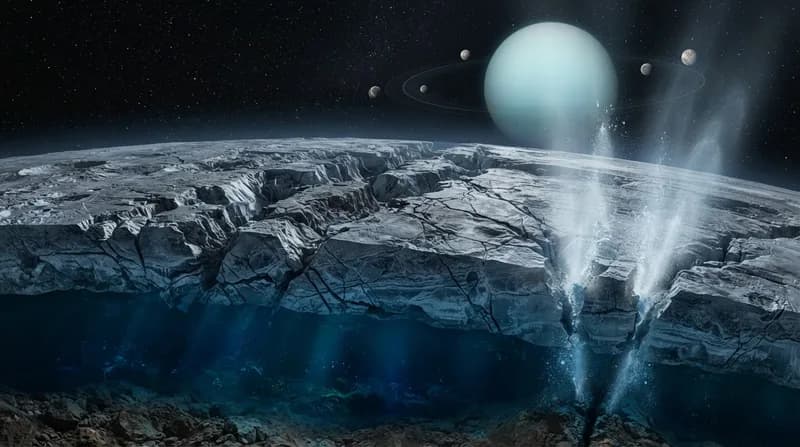
Ariel, the brightest and second-closest major moon to Uranus, has long puzzled planetary scientists with its paradoxical landscape. Measuring a modest 720 miles in diameter, the moon features a surprisingly complex surface marked by smooth plains, ridges, and massive grabens—crustal sections that have collapsed downward. According to new research published in Icarus by the Planetary Science Institute, these dramatic features are likely the footprints of a colossal, ancient subsurface ocean that could have been over 100 miles deep. To put that in perspective, the average depth of Earth’s Pacific Ocean is a mere 2.5 miles.
The researchers behind the study, including lead author Caleb Strom and senior scientist Alex Patthoff, suggest that the moon’s geological complexity is the result of past cryovolcanism and intense tidal stresses. While the moon is currently relatively quiet, its surface topography hints at a past where liquid water, ice, or other volatiles erupted from the interior, carving the vast fractures that define its current appearance. The sheer scale of these surface structures is nearly unparalleled elsewhere in our solar system, serving as a primary indicator of a once-active, liquid-rich interior.
Modeling the Mechanical Forces of Orbit
To understand how such an ocean could exist, the team utilized computer modeling to simulate the tidal forces acting on Ariel throughout its orbital history. As the moon orbits Uranus, gravitational interactions repeatedly distort its shape, transitioning it from a spherical form to a slightly elongated football shape. This cycle of stretching and squeezing generates internal heat, which is essential for maintaining a subsurface ocean in the frigid environment of the outer solar system.
The study concluded that Ariel may have previously maintained an orbital eccentricity of 0.04—a figure approximately 40 times higher than its current value. This level of eccentricity would have significantly amplified the tidal heating effects. By aligning these orbital models with the observed geological fractures on the surface, the team determined that the presence of a deep ocean is the most viable explanation for the structural deformation visible on Ariel today, even if the ocean's exact lifespan remains a mystery.
The Potential for Twin Ocean Worlds
This discovery places Ariel alongside Miranda, another of Uranus' moons, as a candidate for a former "ocean world." Last year, the same research team identified similar geological markers on Miranda, suggesting that the Uranian system may have been far more dynamic than previously assumed. This pattern of discovery is shifting the focus of planetary science toward the outer reaches of the solar system, where icy satellites appear to be recurring, if hidden, ocean reservoirs.
Why It Matters
- Expanding Potential Habitability: Confirming the presence of subsurface oceans on moons like Ariel and Miranda broadens the scope of where liquid water—a prerequisite for life—can exist in the universe.
- Redefining Planetary Dynamics: The evidence of significant tidal heating suggests that moons in the Uranian system were once far more geologically active than their current, cold appearance implies.
- Future Exploration Mandate: Because researchers have only ever imaged the southern hemispheres of these moons, the study provides a roadmap for future NASA missions, predicting exactly where fractures should appear in the unexplored northern reaches.
As the scientific community looks toward the future, the sentiment from the research team is clear: we need to return to the Uranus system. With these models providing specific predictions for what a future probe might uncover, the potential to verify these hidden ocean worlds represents one of the most compelling frontiers in deep-space exploration.