Decoding the Internal Dynamics of Mount Etna
Volcanoes have long been perceived as volatile, unpredictable forces of nature, but new research from a Cornell-led team suggests that the chaos beneath our feet is governed by a measurable, albeit complex, plumbing system. By reconstructing the history of Italy's Mount Etna, scientists have revealed that this iconic volcano can switch between slow-building eruptions and rapid, explosive events based on the volatile gases trapped deep within its magma.
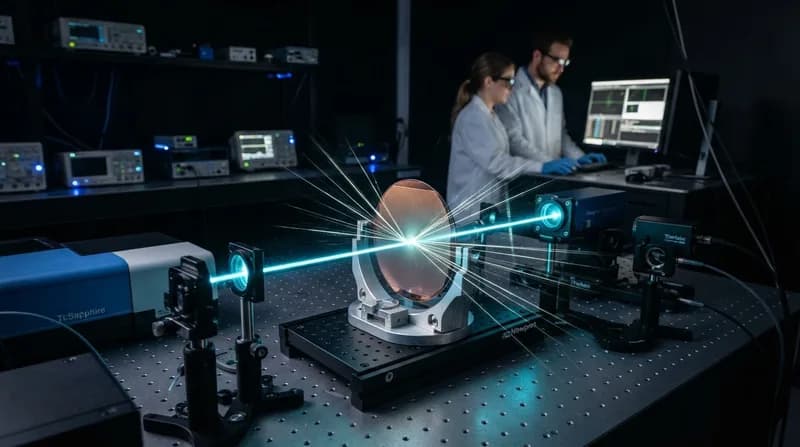
Led by Esteban Gazel, the research team utilized pioneering Raman spectroscopy techniques to peer into the microscopic history of volcanic crystals. By examining gas bubbles—some only a fraction of the width of a human hair—trapped within these crystals, the researchers could calculate the exact pressure and depth at which the magma originated. This unprecedented look at the volcano's internal anatomy provides a clearer picture of why certain eruptions linger for weeks, while others escalate from deep-mantle activity to surface explosions in mere hours.
1. The 122 B.C. Plinian Eruption: A Slow, Shallow Build-up
The 122 B.C. event represents one of Mount Etna's most violent historical moments, characterized as a 'mafic' and Plinian eruption. The research reveals that the magma for this event originated at a depth of approximately 22 kilometers. However, rather than storming the surface, the molten rock took a detour. It ascended and then stalled at a shallower depth of 2 to 5 kilometers.
During this period, which lasted several weeks, the magma underwent a degassing process. This transition period allowed for the release of trapped gases before the final, cataclysmic blast. This evidence confirms that even the most explosive volcanic events can follow a slow-burning path if the magma pauses in shallow reservoirs, providing a critical window that, in the future, might offer advanced warnings for population centers.
2. The Fall Stratified Event: A High-Velocity Deep Ascent
In stark contrast, the 'Fall Stratified' event, which occurred roughly 4,000 years ago, followed a vastly different trajectory. In this scenario, the magma surged directly from the mantle, roughly 24 to 30 kilometers below the surface. This rapid ascent meant the magma reached the surface in just hours, leaving virtually no time for the stalling or degassing seen in the 122 B.C. eruption.
The study identifies the concentration of carbon dioxide as the primary catalyst for this rapid movement. While water often controls shallower, longer-duration eruptions, high thresholds of carbon dioxide serve as a propellant that drives deep magma to the surface with lethal speed. Understanding this 'volatile competition' between water and CO2 allows scientists to categorize eruption styles based on the chemical signature of the gas pressure, a discovery that fundamentally changes how we assess volcanic danger.
Why It Matters
- Predictive Modeling: By understanding the ratio of CO2 and water, scientists can create more accurate physics-based models for eruption risk assessments.
- Global Application: This methodology is currently being deployed to study volcanoes in Hawaii, Chile, and beyond, aiming to standardize volcanic hazard analysis globally.
- Technological Breakthrough: The use of Raman spectroscopy to analyze microscopic gas bubbles in crystals provides a 'black box' recorder for ancient eruptions, turning geology into a precise, forensic science.
As the scientific community continues to apply these findings, the goal remains clear: to transition from reactive observation to proactive modeling. By mapping the 'plumbing' of volcanoes like Mount Etna, researchers are effectively decoding the language of the Earth, providing a vital tool for safeguarding those living in the shadows of the world's most active giants.