A Breakthrough in Chemical Upcycling
Researchers at the U.S. Department of Energy's Oak Ridge National Laboratory (ORNL) have unveiled a groundbreaking method to address the global plastic waste crisis. By utilizing aluminum-based molten salts, the team has successfully demonstrated a process to convert polyethylene—the material commonly found in shopping bags and kitchen cutting boards—into high-value liquid fuels such as gasoline and diesel. Unlike previous methods that required intense thermal energy, this approach achieves a 60 percent gasoline yield under conditions similar to a household oven.
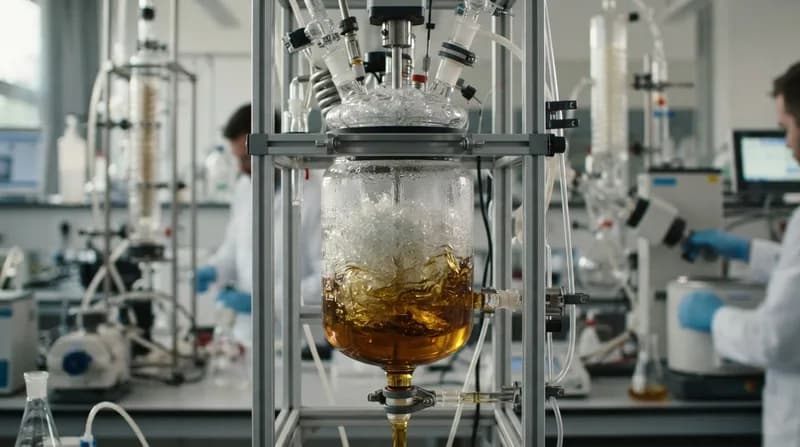
The process is inherently elegant in its simplicity. By combining plastic waste with inexpensive inorganic salts, the molten mixture acts as both the reaction medium and the necessary catalyst. This eliminates the need for expensive noble-metal catalysts, external hydrogen, or harsh organic solvents. This innovation represents a significant shift in polymer chemistry, moving away from high-heat pyrolysis—which typically demands temperatures between 450 and 500 degrees Celsius—to a more sustainable, energy-efficient model operating below 200 degrees Celsius.
The Chemistry Behind the Conversion
The efficiency of the ORNL system stems from the specific behavior of the molten aluminum salts. Through sophisticated analytical techniques, including soft X-ray spectroscopy and nuclear magnetic resonance, researchers identified that charged aluminum atoms within the salt create highly acidic sites. These sites effectively target and sever the long, stable molecular chains of polyethylene, breaking them down into smaller hydrocarbon molecules.
To ensure a precise understanding of the molecular transformation, the team utilized advanced scientific infrastructure, including the Spallation Neutron Source and the Advanced Light Source at Lawrence Berkeley National Laboratory. By tagging carbon ions with deuterium and monitoring hydrogen movement, the researchers successfully mapped how polymer structures influence the final fuel output. In general, simpler polymer chains tended to yield gasoline-like compounds, while more complex structures favored the production of diesel-like fuels.
Why it Matters
- Energy Efficiency: By operating at temperatures below 200°C, the process drastically reduces the energy burden compared to traditional thermal degradation methods.
- Cost-Effectiveness: The reliance on abundant, commercially available aluminum salts avoids the high costs associated with traditional precious-metal catalytic processes.
- Sustainability: This technology provides a potential pathway for circularity, turning ubiquitous landfill-bound plastic waste into useful transportation fuels.
- Scalability: Because the system requires no external initiators and utilizes stable, inorganic media, it is theoretically easier to scale for industrial application than previous lab-grade iterations.
Future Challenges and Outlook
While the laboratory results are promising, the research team is already looking toward the next phase of development. The current aluminum-based system is hygroscopic, meaning it absorbs moisture from the air, which can destabilize the catalytic process. Ongoing studies are focused on confining the molten salts or integrating halogens and carbon-based materials to enhance stability and simplify the separation process. If the researchers can successfully mitigate these environmental sensitivities, this chemical upcycling process could play a vital role in domestic energy security and provide a robust solution for dealing with the massive influx of plastic waste currently straining the environment.