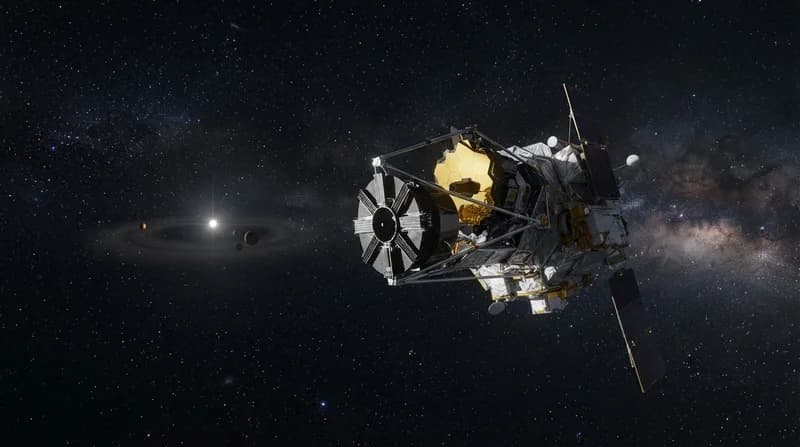
China’s Tianwen-1 orbiter has achieved a significant astronomical milestone by capturing images of the interstellar comet 3I/ATLAS as it passed near Mars. The spacecraft, which is primarily tasked with studying the Red Planet, managed to document the faint but distinct features of the visitor from another star system.
A Glimpse Beyond Our Solar System
The images released by the mission team reveal the comet’s glowing coma and a visible tail, formed as solar radiation interacts with the comet's icy core. Scientists are particularly interested in 3I/ATLAS because it carries chemical signatures and physical properties born in a different stellar environment, offering a unique opportunity to compare our solar system's composition with others.
This observation highlights the versatility of the Tianwen-1 mission, demonstrating that Mars-orbiting hardware can contribute to broader deep-space exploration and the study of transient interstellar objects. Researchers will now analyze the light signatures from the coma to determine the comet's elemental makeup.