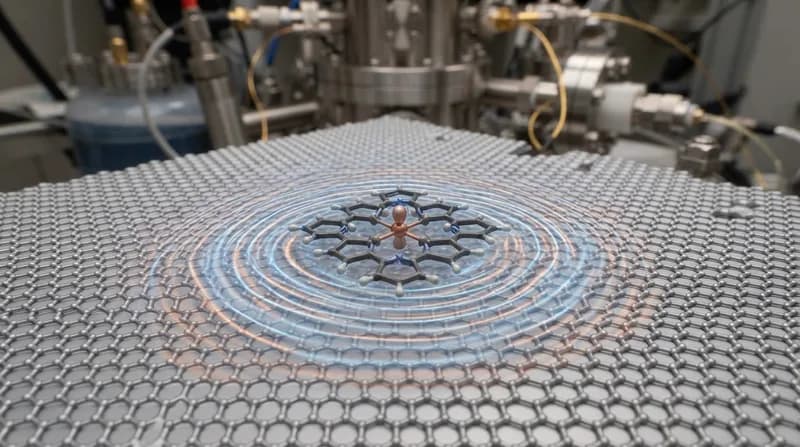
Graphene's Atomic Geometry Rewrites Electrical Rules
The future of electronics might be less about what materials we use and more about how we shape them, according to groundbreaking research from Rice University. Scientists have unveiled a surprising phenomenon: tiny, sharply curved wrinkles in sheets of graphene possess the power to fundamentally alter the material's electrical behavior, creating unexpectedly strong charge separation effects.
Traditionally, engineers have manipulated the electrical characteristics of materials by tweaking their chemical composition or introducing new elements. However, this new discovery suggests a radically different approach. By simply creating microscopic folds and undulations in a two-dimensional material like graphene, researchers found they could induce significant changes in how electricity flows through it. These atomic-scale deformations act like minuscule, precisely engineered gates, influencing the movement of electrons in a way previously thought to require more complex chemical modifications.
This revelation holds immense potential for the development of future technology. Imagine electronic devices that are not only ultrathin but also possess tunable properties controlled purely by their physical geometry. This could pave the way for a new generation of highly sensitive sensors, energy-efficient components, and even novel forms of computing. Instead of relying solely on the periodic table, designers might soon be leveraging the art of atomic-level origami to unlock unprecedented performance and functionality in advanced electronics.