Unlocking the Hidden Chemistry of Cannabis Leaves
For years, the global conversation surrounding the Cannabis plant has been dominated by cannabinoids—the well-known molecules responsible for the plant's psychoactive and pharmacological effects. However, a groundbreaking study from Stellenbosch University suggests that we have been ignoring a vast, untapped treasure trove of biological data hidden within the plant’s leaves, which are typically discarded as industrial waste.
By utilizing highly advanced analytical chemistry, researchers have identified 79 different phenolic compounds within the plant. Among these, 25 were identified for the first time in Cannabis, and most significantly, 16 were categorized as flavoalkaloids. This discovery marks the first time these rare compounds have been documented in the species, challenging the conventional wisdom that Cannabis is solely defined by its cannabinoid profile.
The Breakthrough Technique: Two-Dimensional Chromatography
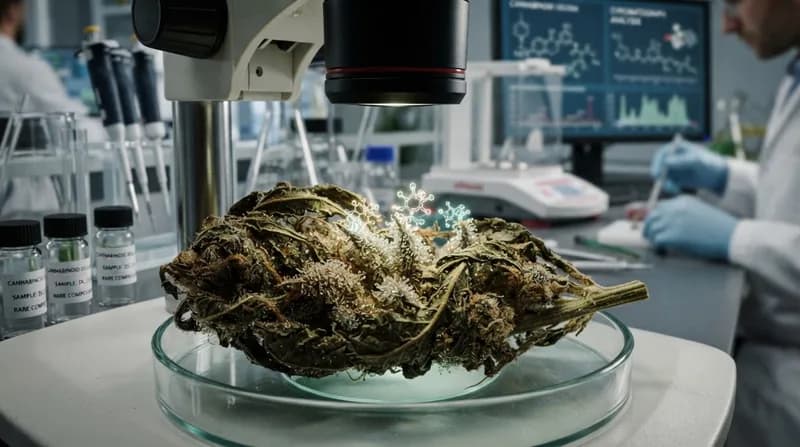
The complexity of the Cannabis plant is immense, containing over 750 unique metabolites that often exist in extremely low concentrations. Identifying these individual components is a monumental task because they are frequently obscured by more abundant chemicals. To bypass this, the team at Stellenbosch University employed a sophisticated dual-method approach: comprehensive two-dimensional liquid chromatography paired with high-resolution mass spectrometry.
Traditional methods often fail to distinguish between closely related chemical structures when they appear in a dense mixture. By separating compounds in two distinct ways, the researchers achieved the precision necessary to isolate rare flavoalkaloids from the much more common flavonoids that surround them. This precision highlights that previous scientific failures to identify these compounds were not due to their absence, but rather to the limitations of historical detection technology.
Why it Matters: Biomedical Implications
- Waste Valorization: Shifting the perception of "cannabis waste" from trash to a valuable raw material for pharmaceutical production.
- New Medicinal Avenues: Phenolic compounds and flavoalkaloids are often linked to antioxidant, anti-inflammatory, and anti-carcinogenic properties, opening doors for novel drug development.
- Chemical Diversity: The discovery that these compounds vary significantly between strains suggests that the genetic diversity of the plant could be leveraged for targeted therapeutic research.
- Refined Analytical Standards: The success of two-dimensional chromatography in this study sets a new benchmark for how researchers analyze complex botanical samples in the future.
The Road Ahead for Cannabis Research
The implications of this study are profound for the pharmaceutical and nutraceutical industries. With the identification of such a rich and unique non-cannabinoid phenolic profile, scientists now have a new roadmap for exploring the medical potential of the plant. As the researchers noted, the extreme variation found between just three commercial strains suggests that the chemical landscape of Cannabis is far deeper and more diverse than previously hypothesized.
Moving forward, the focus will likely shift toward quantifying these rare compounds and determining their specific biological activity. If these flavoalkaloids prove effective in clinical settings, the current "waste" generated by cannabis cultivation could become a high-value commodity, potentially lowering costs for sustainable medical production and providing a new source for drug discovery.