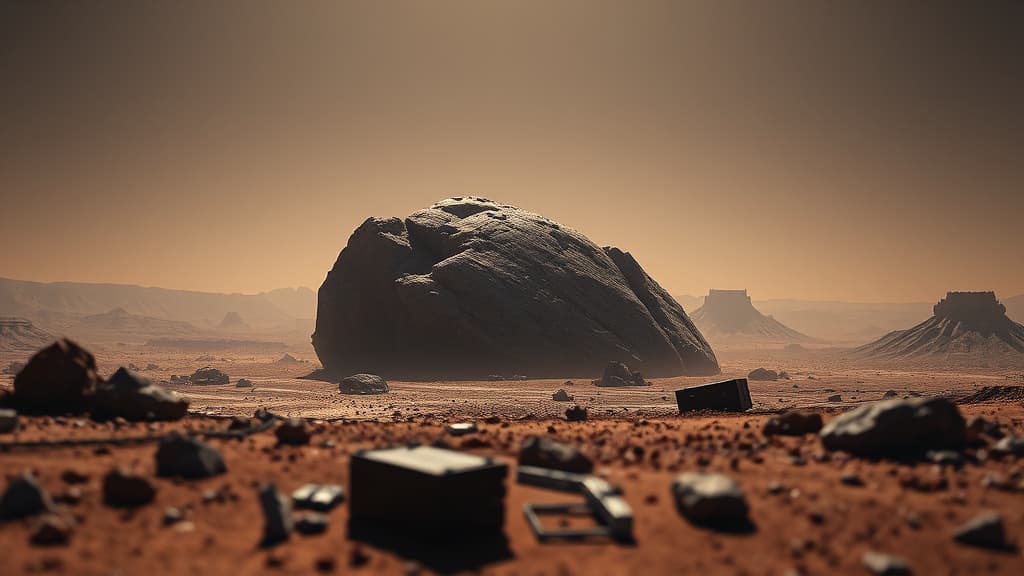
Recent studies have unveiled that a single asteroid impact has played a pivotal role in altering the surface characteristics of Deimos, one of Mars' moons. A 320-meter asteroid struck Deimos, creating a substantial depression in its southern hemisphere and redistributing surface material up to 200 meters deep. This research was led by the University of Bern and involved advanced simulations to model over 100 potential impact scenarios.
The high-resolution simulations suggest that Deimos, with its fragile and porous structure, absorbed some of the energy from the collision, thereby preventing complete destruction. This unique morphology contrasts sharply with its counterpart, Phobos, which is heavily cratered. Such differences may point to diverse formation histories for the two moons.
Key Findings:
- An asteroid approximately 320 meters in diameter struck Deimos at a 45-degree angle.
- The impact created a sizable depression and redistributed surface material across the moon.
- Deimos' smooth surface is attributed to loose regolith, differing notably from Phobos.
- The findings have significant implications for JAXA's Martian Moons eXploration (MMX) mission.
- Deimos may have formed from materials ejected during Martian impacts, resembling rubble-pile asteroids.
Understanding Deimos' formation is crucial for future exploration missions. JAXA's MMX aims to collect samples from Deimos, providing further insights into the origins and characteristics of Martian satellites. As researchers continue to dissect the effects of this asteroid impact, the implications for planetary science and the understanding of celestial bodies only deepen.