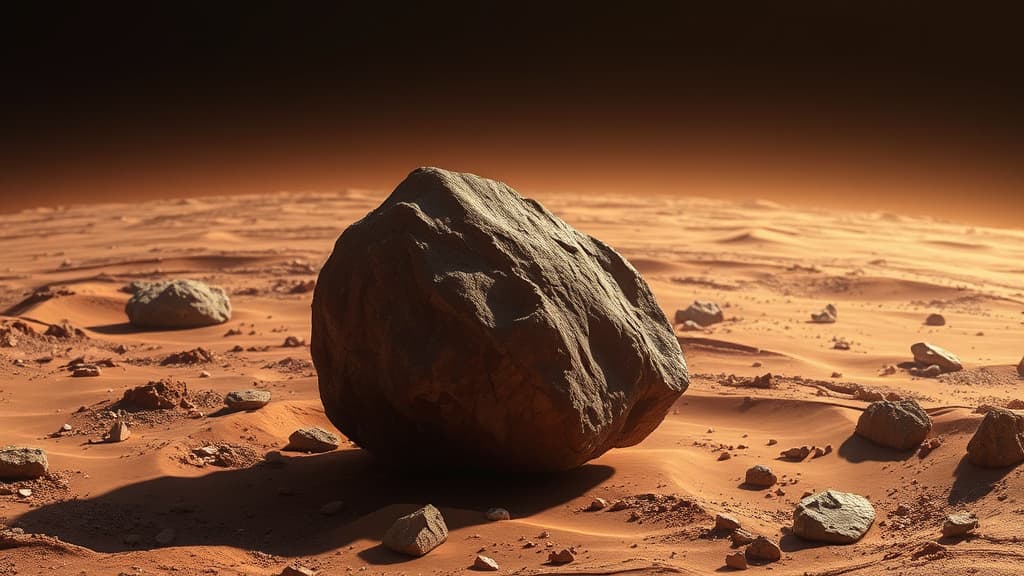
A recent study led by the University of Bern sheds light on the enigmatic features of Mars’ moon Deimos, positing that a 320-meter asteroid impact may have played a crucial role in shaping its surface. The study highlights how this asteroid impact, occurring at a 45-degree angle, likely created a significant depression near the moon's south pole while preserving its overall structure.
Key findings of the research include the following:
- A massive impact created a large depression without resulting in the destruction of Deimos.
- The asteroid strike may explain Deimos' unusually smooth surface, which is lavishly coated with regolith that indicates material was redistributed across the moon.
- High-resolution simulations and over a hundred tests were conducted to analyze the impact, which suggest that Deimos’ surface may consist of regolith layers extending up to 200 meters in thickness.
- The findings imply that Deimos shares similarities with 'rubble-pile' asteroids, hinting at a porous and fragile structure that raises questions regarding its origins, possibly linking it to impact events on Mars.
- This research contributes significantly to our understanding of Deimos, particularly in anticipation of future missions, such as the Japan Aerospace Exploration Agency’s (JAXA) Martian Moons eXploration (MMX) set to launch in 2026, which aims to investigate Deimos and its sibling moon, Phobos, more closely.
The implications of these findings are profound as they not only offer insights into the geological history of Deimos but also set the stage for upcoming explorations that could further unravel the mysteries of Mars' moons.