E-BUZZ ME Logo
ScienceTechnical Deep Dive

Are Humans Truly the Ultimate Super-Predator? New Research Questions Wildlife Fear

Published
Are Humans Truly the Ultimate Super-Predator? New Research Questions Wildlife Fear
1 min read186 words

The Gist

A deep dive into three decades of research reveals that wild animals distinguish between lethal human threats and harmless observers, challenging our status as universal super-predators.

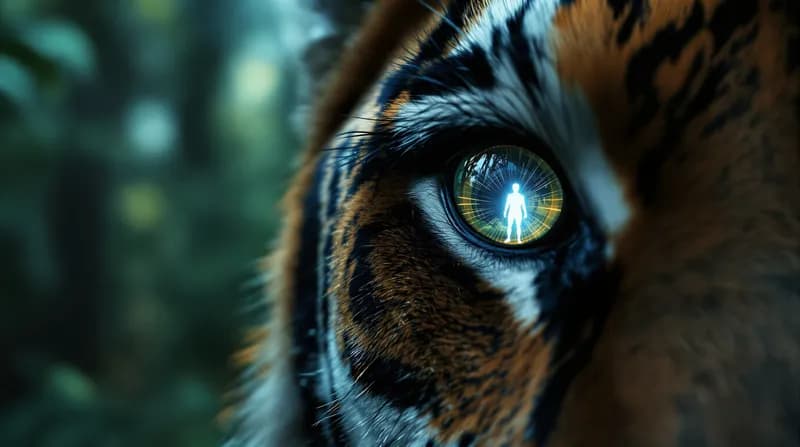
For decades, humans have been labeled as the planet's ultimate 'super-predator,' a force that strikes fear into the heart of every wild creature. However, a comprehensive analysis of thirty years of scientific research suggests that this relationship is more nuanced than previously thought. The study indicates that wildlife does not react to all humans with the same level of intensity.

Lethal vs. Non-Lethal Presence

According to the findings, animals exhibit significantly higher levels of alertness and spend considerably less time feeding when they encounter humans who pose a direct, lethal threat, such as hunters or fishers. In these scenarios, the 'super-predator' label holds true as animals prioritize survival over essential activities like foraging.

The Impact of Tourism and Research

In contrast, the presence of tourists, scientific researchers, and other non-lethal human groups triggers much weaker and less predictable reactions. While animals remain aware of these individuals, the lack of a direct threat allows them to maintain more normal behavioral patterns. This distinction suggests that wildlife can adapt to human presence when it is not associated with predation, potentially reshaping how we manage conservation and ecotourism areas.

Related Stories

Semantically matched articles, ranked by topic overlap and freshness.

Unprecedented Warming: Earth's Current Climate Shift Outpaces Geological History
Science66%

Unprecedented Warming: Earth's Current Climate Shift Outpaces Geological History

New analysis of Earth's climate history reveals that the current rate of global warming is faster than any previously recorded geological event.

New Giant Salamander Species Identified from 3.5-Million-Year-Old Japanese Fossils
Science64%

New Giant Salamander Species Identified from 3.5-Million-Year-Old Japanese Fossils

Researchers have identified a new genus and species of giant salamander, Limnospondylus ajimuensis, from fossils originally discovered over two decades ago.

Ancient Egyptian Ape Fossil Challenges Established Human Evolutionary Timeline
Science64%

Ancient Egyptian Ape Fossil Challenges Established Human Evolutionary Timeline

A newly discovered fossil in northern Egypt suggests the ancestors of modern apes and humans may have emerged in North Africa rather than East Africa.

Biological Age Linked to Weight Loss Success in New Study
Science61%

Biological Age Linked to Weight Loss Success in New Study

A recent study suggests that individuals with a biological age younger than their chronological age may lose more weight when following calorie-restricted diets.

AI Aids Stanford Researchers in Discovering Natural Weight Loss Molecule
Science61%

AI Aids Stanford Researchers in Discovering Natural Weight Loss Molecule

Stanford scientists have identified a natural molecule that mimics the weight-loss effects of Ozempic with fewer side effects by targeting specific brain regions.

U.S. Schools Struggle with Concussion Support for Returning Students
Science60%

U.S. Schools Struggle with Concussion Support for Returning Students

A new study reveals that many public schools lack the necessary policies and staff training to support students recovering from concussions.

Sulfur-Based Compound Identified as Potential Breakthrough for Aging Muscle Repair
Science60%

Sulfur-Based Compound Identified as Potential Breakthrough for Aging Muscle Repair

Researchers have discovered a compound named LASSS that protects proteins essential for muscle recovery, offering hope for combating age-related muscle loss.

New Experimental Antiviral Pill Shows Promise in Halting Measles Transmission
Science60%

New Experimental Antiviral Pill Shows Promise in Halting Measles Transmission

A breakthrough antiviral treatment has successfully prevented the spread of a measles-like virus in animal trials, offering a potential new tool to contain future outbreaks.