A Major Shift in Geologic Chronology
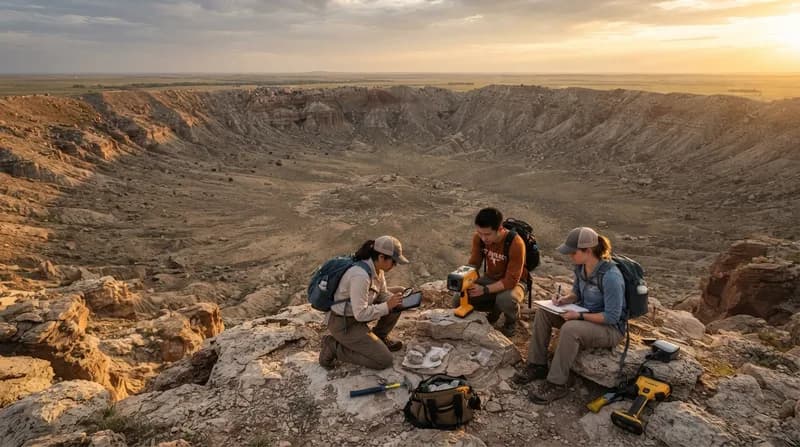
Researchers at The University of Texas at Austin have fundamentally altered our understanding of the Ames impact structure, a significant geological feature buried deep beneath Oklahoma. Long considered a cornerstone of the Ordovician Meteor Event—a hypothetical era during which Earth may have been encircled by a Saturn-like ring of debris—the crater has been found to be nearly 100 million years younger than previously assumed. This discovery, published in Meteoritics & Planetary Science, shifts the formation of the crater from the Ordovician period to the Late Devonian, aligning it more closely with one of Earth’s most severe biological catastrophes.
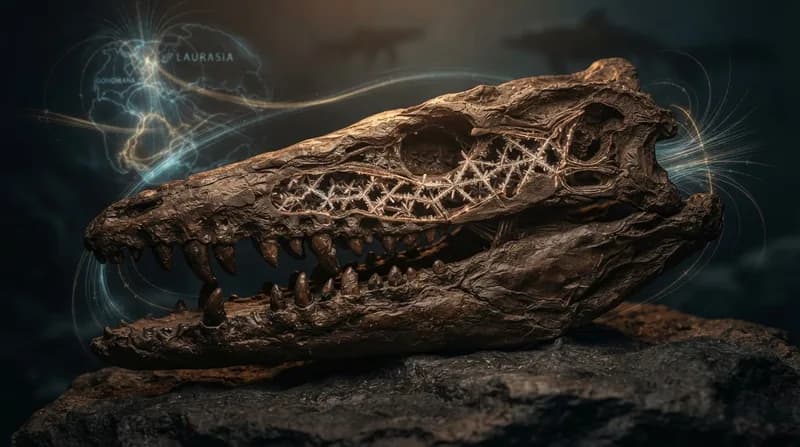
The Ames crater, which is both a site of immense scientific intrigue and a major hub for oil and gas production, had been misdated for years due to the reliance on biological indicators. Previous dating attempts utilized fossilized teeth from ancient, eel-like organisms called conodonts. However, the new study suggests that these fossils were likely 'reworked'—meaning they were already millions of years old when the asteroid impact occurred—and were merely churned up and deposited into the newer impact site during the collision. This reliance on misleading biological evidence effectively obscured the true age of the crater for decades.
The Role of Zircon Crystals in Dating
To bypass the inaccuracies associated with fossil evidence, the research team utilized high-precision zircon U-Pb dating. Zircon crystals are incredibly resilient, acting as tiny time capsules that preserve the history of the earth. When subjected to the catastrophic pressures of a meteor strike, these crystals undergo a distinct recrystallization process. By analyzing these microscopic changes, scientists can pinpoint the exact timing of an impact with far greater accuracy than biological remains allow.
The team, in collaboration with NASA, confirmed these findings using advanced imaging techniques, including cathodoluminescence and electron backscatter diffraction. These methods allowed the researchers to visually verify that the zircons had indeed been altered by the intense heat and shock of a specific impact event, rather than natural environmental aging. This methodology provides a much more robust framework for mapping ancient geological events.
Why it Matters
- Redefining Extinctions: By dating the crater to approximately 370 million years ago, the impact now coincides with the Frasnian-Famennian mass extinction, which decimated marine life during the Late Devonian.
- Refining the Timeline: The study effectively removes the Ames crater from the Ordovician Meteor Event, forcing a re-evaluation of current theories regarding ancient asteroid debris rings.
- Methodological Advancements: The study underscores the necessity of moving beyond biological dating in geological sites, favoring radioisotopic constraints that offer more reliable temporal data.
- Scientific Legacy: The project highlights the collaborative nature of geosciences, building upon the foundational fieldwork conducted by researchers who dedicated their careers to unlocking the secrets of the Earth's crust.
Ultimately, this research serves as a critical correction in the history of North American geology. By moving the Ames impact from the Ordovician to the Devonian, scientists can better understand the causal factors behind Earth’s mass extinctions. The central question remains: were these global events triggered by extraterrestrial impacts or internal volcanic activity? With a more precise timeline for these geological landmarks, researchers are now better equipped to distinguish between these catastrophic forces and understand the resilience of life on our planet.