ScienceTechnical Deep Dive

A Decades-Old Forestry Experiment Offers a Sustainable Path Forward

Published
EElectricBuzz Editorial Team
A Decades-Old Forestry Experiment Offers a Sustainable Path Forward
3 min read496 wordsElectricBuzz Editorial Team

The Gist

“A long-neglected 30-year study in Australian forests reveals that strategic thinning could be the key to balancing timber production, carbon sequestration, and biodiversity.”

The Forgotten Experiment

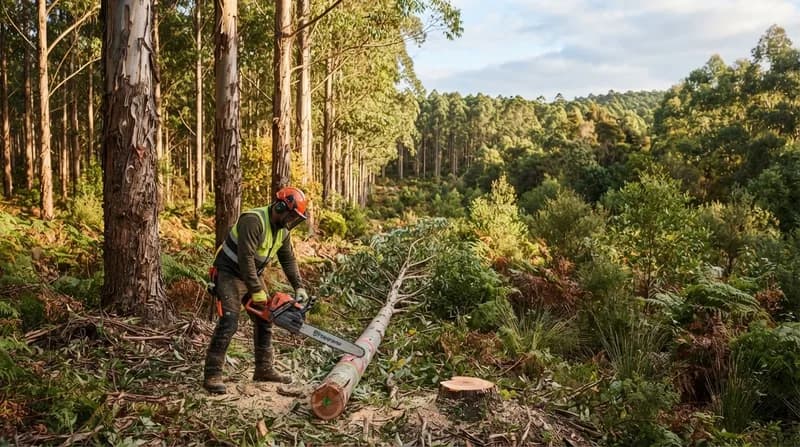
For decades, the forestry industry has been trapped in a polarized debate: keep forests pristine and untouched, or employ clearfell logging to support local economies. In the late 1980s, the Victorian government in Australia launched the Silvicultural Systems Project, a landmark experiment designed to test alternatives to the controversial clearfelling method. Scientists established research plots across two primary sites, Tanjil Bren and Cabbage Tree Creek, to compare how different forest management techniques impacted regeneration and growth.

The study tested various silvicultural approaches, ranging from large-scale clearfells to heavy thinning, where 50 to 70 percent of trees were removed. For years, the project provided data, but as the original clearfell sites showed the most rapid regeneration, interest waned. The signage fell into disrepair, the access roads were reclaimed by nature, and the experiment was largely forgotten by the public. However, beneath the canopy, the forest continued its silent, steady evolution.

The Surprising Resurgence

In 2014, researchers returned to the Tanjil Bren site to assess the long-term impacts of those original interventions. What they discovered fundamentally challenged current forest management dogma. While the clearfelled areas remained productive, the heavily thinned sections of the forest had undergone a remarkable transformation. The trees that were left behind had benefited significantly from the reduced competition, resulting in explosive growth.

These remaining trees, now roughly 80 years old, reached diameters exceeding 1.5 meters at chest height. Astonishingly, the largest trees in these thinned stands were 20 percent larger in diameter than their counterparts in unharvested control areas. Even more impressive was the carbon sequestration data: the thinned forest had successfully recaptured the carbon lost during the initial harvest and had added enough additional storage to match or exceed the levels found in untouched forest benchmarks.

Why It Matters

This discovery provides a compelling argument against the traditional "conservation versus production" binary. By shifting the focus toward strategic thinning, forest managers can potentially satisfy multiple competing interests simultaneously. The implications for forest health and biodiversity are substantial:

  • Fire Resilience: The larger, more robust trees produced through thinning are structurally more capable of surviving severe wildfire events.
  • Wildlife Habitat: Increased tree diameter leads to the earlier development of hollows, which are essential nesting grounds for vulnerable species like the Leadbeater’s possum and the greater glider.
  • Economic Versatility: The process allows for the production of timber products without requiring the total destruction of the ecosystem that clearfelling necessitates.
  • Carbon Stability: Thinning proved not to be a net negative for the atmosphere, with the forest recovering its carbon balance significantly faster than anticipated.

The findings from Tanjil Bren suggest that there is no singular "silver bullet" for forest management. Instead, the research highlights the necessity of long-term scientific oversight in our natural spaces. By identifying and maintaining forgotten experiments, society can unlock a more nuanced understanding of how to work with, rather than simply extract from, the environment to ensure that carbon storage, timber production, and biological conservation exist in a sustainable harmony.


SPONSORED
The 5 Best Over-Ear ANC Headphones of 2026, Tested & Ranked
Editor's Pick Guide
92/100
Tech & Gadgets•12 min read

The 5 Best Over-Ear ANC Headphones of 2026, Tested & Ranked

We locked five over-ear ANC picks for 2026 — Sony WH-1000XM6, Bose QuietComfort Ultra 2, Soundcore Space One, Sennheiser Momentum 5, and Apple AirPods Max 2 — then stress-tested them on lab metrics, long-term owner truth, and live street prices.

Related Stories

Semantically matched articles, ranked by topic overlap and freshness.

Geologic Reset: Oklahoma’s Ames Crater Dated 100 Million Years Younger
Science

Geologic Reset: Oklahoma’s Ames Crater Dated 100 Million Years Younger

New research from the University of Texas at Austin redefines the timeline of a major impact crater, linking it to a devastating mass extinction event rather than ancient debris clusters.

Diet Drinks vs. Water: Landmark Two-Year Trial Challenges Weight Loss Assumptions
Science

Diet Drinks vs. Water: Landmark Two-Year Trial Challenges Weight Loss Assumptions

A major two-year clinical trial concludes that diet beverages are as effective as water for weight management, countering long-standing concerns regarding metabolic health.

The Microbial Clock: How Your Gut Microbiome Predicts Brain Aging
Science

The Microbial Clock: How Your Gut Microbiome Predicts Brain Aging

A groundbreaking UCLA study reveals that specific gut bacteria and their metabolic byproducts serve as early indicators of brain aging, even in healthy, younger adults.

A Solar Revolution: New Material Bypasses Expensive Metals for Green Hydrogen
Science

A Solar Revolution: New Material Bypasses Expensive Metals for Green Hydrogen

Researchers at Oregon State University have engineered a light-activated framework that makes hydrogen production from water cheaper, simpler, and more sustainable.

Primordial Magnetic Fields May Solve the Universe's Expansion Paradox
Science

Primordial Magnetic Fields May Solve the Universe's Expansion Paradox

New three-dimensional simulations suggest that tiny magnetic fields born shortly after the Big Bang could resolve the long-standing 'Hubble tension' in cosmology.

The Invisible Danger: Why 'Weak' Sunlight Is More Harmful Than You Think
Science

The Invisible Danger: Why 'Weak' Sunlight Is More Harmful Than You Think

A landmark study reveals that low-intensity UV exposure, even without visible skin redness, inflicts cumulative DNA damage that can lead to cancer.

Mapping the Mind: New Study Reveals How Depression Treatments Reshape Brain Connectivity
Science

Mapping the Mind: New Study Reveals How Depression Treatments Reshape Brain Connectivity

A landmark study using fMRI scans has identified specific neural signatures that emerge just weeks into depression treatment, offering a potential roadmap for personalized psychiatric care.

Unlocking the Ancient Compass: How 97-Million-Year-Old Fossils Reveal Nature's First GPS
Science

Unlocking the Ancient Compass: How 97-Million-Year-Old Fossils Reveal Nature's First GPS

Researchers have discovered microscopic magnetic fossils that suggest prehistoric animals possessed a sophisticated internal navigation system long before previously thought.