E-BUZZ ME Logo
ScienceTechnical Deep Dive

Ancient Worm Fossils Reveal Earliest Evidence of Right-Sided Preference

Published
Ancient Worm Fossils Reveal Earliest Evidence of Right-Sided Preference
1 min read169 words

The Gist

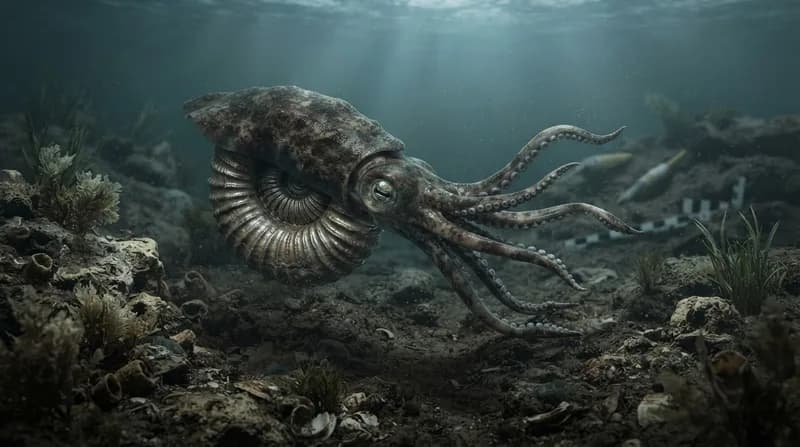
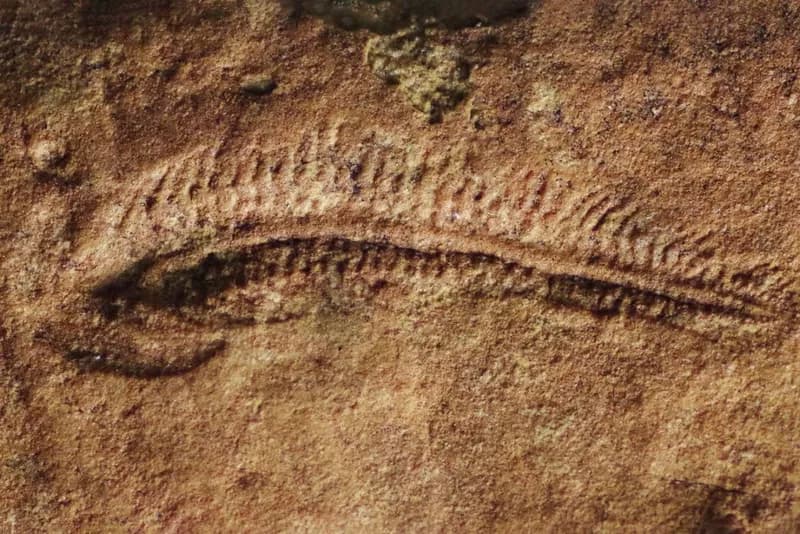
A half-billion-year-old worm known as Spriggina floundersi may hold the secret to the origins of right- and left-handedness in the animal kingdom.

New paleontological research into fossils of Spriggina floundersi, a creature that lived approximately 550 million years ago, suggests that behavioral asymmetry is far older than previously thought. These ancient worms appear to have exhibited a distinct preference for turning right, marking the earliest known evidence of 'handedness' in the animal kingdom.

The Origins of Asymmetry

The study of these Ediacaran-period fossils provides a fascinating glimpse into the evolution of the nervous system. Lateralization—the tendency for one side of the brain or body to specialize in specific tasks—is a trait shared by many modern animals, including humans. The discovery suggests that this fundamental feature of complex life emerged during the dawn of animal evolution.

Researchers believe that this preference for one side of the body over the other allowed for more efficient movement and neural processing. By analyzing the fossilized tracks and bodily structures of Spriggina, scientists have identified consistent patterns that point toward a right-sided bias, predating other known examples of behavioral asymmetry by millions of years.


Related Stories

Semantically matched articles, ranked by topic overlap and freshness.

Neural Switch Discovered Controlling Bee Colony Labor Division
Science69%

Neural Switch Discovered Controlling Bee Colony Labor Division

Researchers have identified specific brain circuits that dictate the professional roles of honeybees as they age.

Predictable Antarctic Ice Loss Offers Decades for Sea Level Preparation
Science63%

Predictable Antarctic Ice Loss Offers Decades for Sea Level Preparation

New research suggests that Antarctic ice retreat may remain predictable through 2050, giving governments a critical window to implement coastal defenses.

NASA’s Webb Telescope Uncovers Hidden Giant Planet in Beta Pictoris System
Science60%

NASA’s Webb Telescope Uncovers Hidden Giant Planet in Beta Pictoris System

Astronomers have discovered a hidden giant planet, Beta Pictoris d, using the James Webb Space Telescope to peer through a dense disk of cosmic dust.

Natural Plant Compound Shows Promise in Combating Rheumatoid Arthritis
Science60%

Natural Plant Compound Shows Promise in Combating Rheumatoid Arthritis

Researchers have identified a plant-derived compound that reduces joint damage and rebalances immune activity in animal models, offering a potential new treatment pathway.

Fields Medal 2026: Mathematicians Honored for Unifying Physics Laws
Science59%

Fields Medal 2026: Mathematicians Honored for Unifying Physics Laws

The prestigious Fields Medal has been awarded to mathematicians whose groundbreaking work bridges the gap between geometry and the fundamental laws of physics.

Simple AI Prompt Resolves Decades-Old Mathematical Conjecture
Science59%

Simple AI Prompt Resolves Decades-Old Mathematical Conjecture

For the second time in a week, artificial intelligence has disproved a long-standing mathematical conjecture using surprisingly basic prompts.

Breakthrough Fluoride-Free Gel Could Regrow Damaged Tooth Enamel
Science59%

Breakthrough Fluoride-Free Gel Could Regrow Damaged Tooth Enamel

Researchers have developed a protein-inspired gel that mimics natural tooth formation to repair microscopic cracks and rebuild enamel.

Global Shift to Healthier Diets Could Slash Farm Emissions by 85%
Science59%

Global Shift to Healthier Diets Could Slash Farm Emissions by 85%

A transition toward more nutritious food choices could revolutionize global agriculture and significantly reduce the environmental impact of livestock farming by 2050.