A New Window Into Antiquity
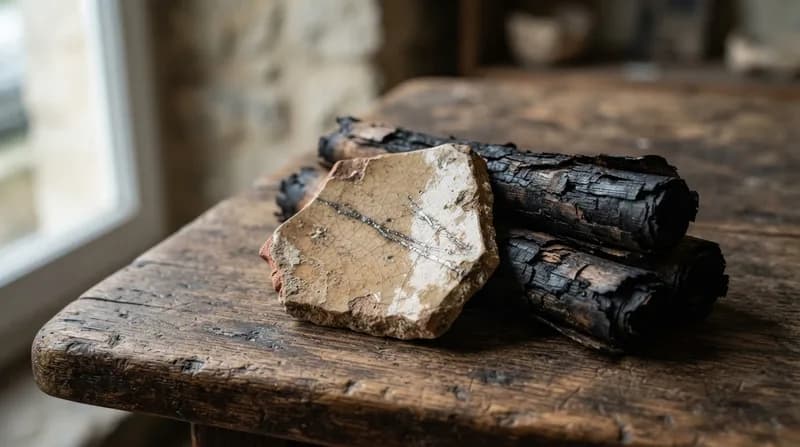
For nearly two millennia, the carbonized scrolls of Herculaneum have remained a tantalizing enigma. Buried by the volcanic ash of Mount Vesuvius in 79 C.E., the scrolls were transformed into fragile, charred cylinders. While they represent the only intact library from the ancient world, any attempt to physically unroll them often resulted in the brittle material crumbling into dust. Now, a breakthrough study from researchers associated with the University of California, Berkeley, offers a non-invasive solution that could unlock centuries of lost literature, philosophy, and history.
The research team, led by Douglas Seiler, hypothesized that the chemical composition of the ink used by Roman scribes holds the answer. By testing the premise that some ancient inks contained trace amounts of lead, researchers discovered that this metallic element provides a distinct signature in X-ray imaging. Because lead absorbs X-rays significantly more effectively than carbonized papyrus, it creates a high-contrast image that allows digital tools to isolate and 'read' the characters trapped deep within the scrolls.
The Experimental Process
To validate this theory, Seiler and his team conducted rigorous experiments using modern replicas. They sourced authentic papyrus and traditional Japanese lampblack ink, then spiked the ink with varying concentrations of lead. After volunteers hand-wrote passages from diverse sources—ranging from the Bible to science fiction scripts—onto the papyrus, the scrolls were rolled and subjected to extreme heat in a controlled, low-oxygen furnace. This process successfully replicated the carbonization effect observed in the Herculaneum artifacts.
The team then collaborated with physicist Jake LaManna at the National Institute of Standards and Technology (NIST) to perform three-dimensional CT scans of the burned replicas. The results were immediate and dramatic: the lead-laden letters appeared as brilliant, high-contrast markers against the darkened, charred backdrop. The researchers found that even minimal amounts of lead—as low as 25 micrograms per square centimeter—were easily detectable through X-ray tomography and handheld X-ray fluorescence scanners. This provides a practical, efficient method for screening existing scrolls to identify those most likely to yield readable text.
Cross-Pollination of Technology
The project also highlights an intriguing intersection between archaeology and modern battery technology. To visualize the text, the researchers utilized specialized software originally designed for the automotive sector. Michael Cyrus Daugherty, a researcher at NIST, repurposed algorithms created to analyze the internal 'jelly roll' structure of lithium-ion batteries. By adjusting the code to account for the irregular, varying thickness of ancient papyrus layers, the team was able to digitally 'unroll' the charred artifacts with unprecedented precision.
Why It Matters
- Preservation: This technique bypasses the need for physical manipulation, preventing the destruction of invaluable historical artifacts.
- Scalability: Portable X-ray fluorescence scanners allow for rapid, initial screening of the 1,800+ scrolls currently housed in global collections.
- Literary Recovery: Many of these scrolls contain works from the Epicurean philosopher Philodemus and potentially other lost voices from Roman intellectual circles, representing a major leap for classical scholarship.
- Cross-disciplinary Innovation: The adaptation of battery-imaging software demonstrates how modern industrial diagnostics can provide breakthroughs in historical preservation.
This development adds a powerful tool to the ongoing 'Vesuvius Challenge,' a high-stakes global effort to decode these ancient documents. With the ability to chemically target specific ink compositions, the scientific community is now better positioned than ever to hear the long-silenced voices of the ancient world.