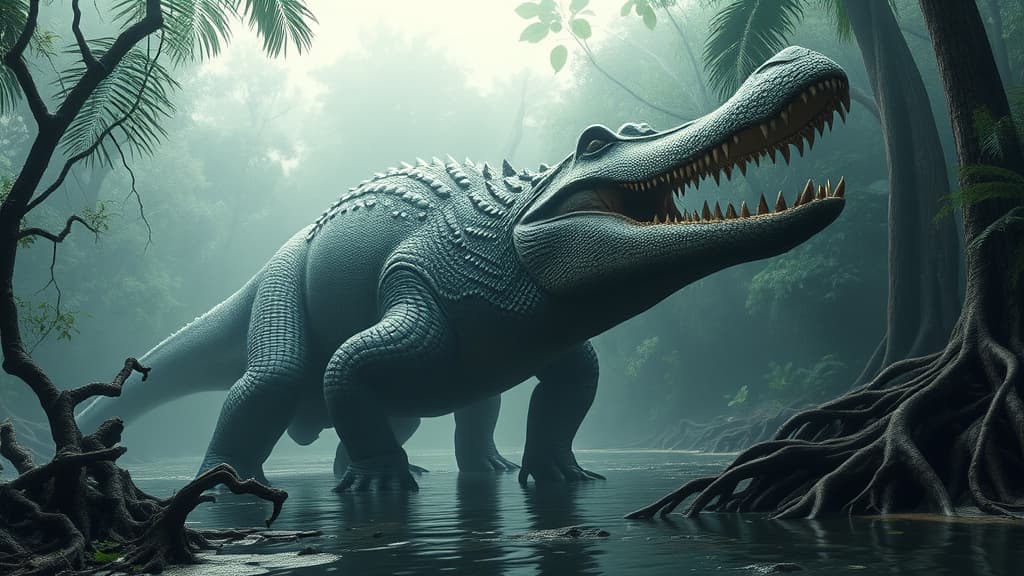
The discovery of fossil bite marks has led researchers to believe that Purussaurus neivensis, a massive crocodylian, was the most important predator in South America's Miocene ecosystem. This species, which grew up to 23 feet in length, may have played a crucial role in controlling populations of giant herbivores.
Key Insights
Technical analysis of the fossil bite marks indicates that crocodylians were more significant predators than mammals in this ancient tropical ecosystem. The massive size of Purussaurus neivensis and its likely role in population control highlight the importance of crocodylians in the Miocene food chain.