Revolutionizing Infrastructure Deployment
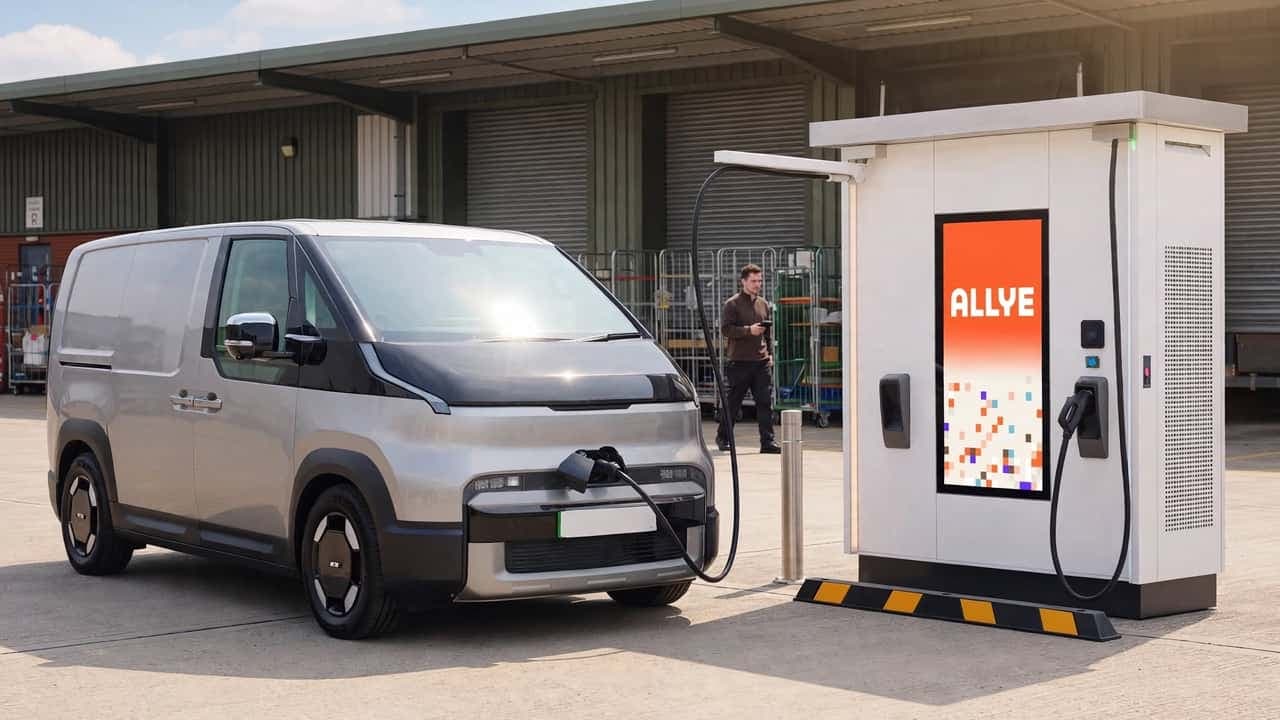
The transition to electric fleets often hits a major bottleneck: the electrical grid. For many logistics companies and depot operators, installing high-capacity DC fast chargers requires massive grid upgrades that can cost hundreds of thousands of dollars and take months, or even years, to finalize. Allye Energy is changing that narrative with the introduction of its new battery-buffered fast charger, which utilizes second-life electric vehicle batteries to provide high-power output without demanding a heavy-duty grid connection.
This innovative solution acts as a massive power reservoir. By using repurposed EV battery packs—sourced domestically in the UK—the unit can be installed on a modest three-phase 16-ampere grid connection. It slowly draws power from the mains to fill its internal buffer and then discharges that stored energy to vehicles at high speeds. This decoupling of the grid connection from the charging output allows for a "plug-and-play" experience that can be operational in as little as one day.
Technical Specifications and Capability
The Allye MEV charger is designed to be as versatile as it is efficient. It supports a power output of up to 400 kW, which can be distributed between two EVs simultaneously, or directed toward multiple satellite charging points. The internal storage capacity comes in two configurations: 155 kWh or 232 kWh, ensuring that there is enough overhead to support rapid charging sessions throughout the day.
- Power Output: Up to 400 kW (shared between two ports).
- Battery Storage: Available in 155 kWh or 232 kWh capacities using repurposed automotive cells.
- Grid Input: Scalable from a minimal 16A three-phase connection up to 125A.
- Compatibility: Fully supports both 400-volt and 800-volt EV architectures.
- Deployment: Modular, ground-mounted unit suitable for temporary sites or permanent depots.
Beyond the core charging hardware, Allye has integrated robust security and safety features. Each battery pack within the system is monitored with off-gas detection and protected by pyro fuses and internal fire barriers. To safeguard the physical hardware, the unit includes cable-theft deterrents, forensic marking, and quick-release terminals, making it a viable solution for remote or semi-public locations.
Implications for Commercial Fleets
The business case for this technology was recently proven at J&M Murdoch’s refuse depot in Glasgow. Faced with a quote of £300,000 to upgrade the site’s grid infrastructure to support electric vehicle charging, the company opted for the Allye battery-buffered system instead. The system was installed rapidly and currently facilitates approximately 200 kWh of charging throughput daily, effectively sidestepping a massive capital expenditure while enabling fleet electrification today.
Because the charger is a modular, standalone unit, it offers unprecedented mobility for commercial entities. If a company shifts its operations or ends a lease, the hardware can be disconnected and moved to a new site, protecting the investment from being permanently tied to a single location. This flexibility makes it a powerful tool for sectors that are transitioning to sustainable energy but require the agility to adapt to changing operational needs.