The Rise of the Model A
The electric vehicle landscape is currently buzzing with talk of aerial mobility, particularly following high-profile demonstrations of flight-capable road vehicles. While Tesla recently grabbed the spotlight with its latest Roadster presentation, startup Alef Aeronautics has responded by highlighting the progress of its own flagship innovation, the Model A. Alef, a California-based company founded in 2015, has spent over a decade refining its vision of a vehicle that seamlessly bridges the gap between conventional road transport and vertical takeoff and landing (VTOL) capabilities.
Unlike many theoretical concepts that remain locked in CAD files, the Model A is designed as a functional, two-seater vehicle capable of driving on standard city streets and maneuvering through the sky. By utilizing a unique design that allows it to operate like a drone, the vehicle offers a distinct alternative to the high-pressure propulsion methods favored by other manufacturers. With a reported road range of 200 miles and a flight range of 110 miles, the Model A seeks to provide a practical solution for commuters looking to bypass terrestrial congestion.
Regulatory Progress and Technical Ambitions
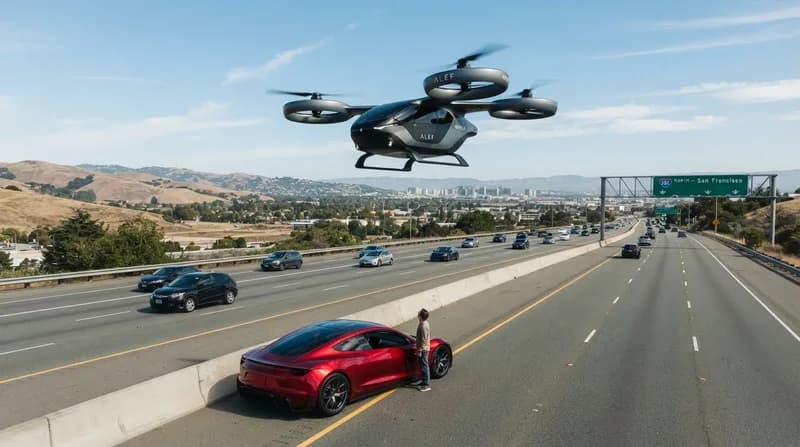
A critical milestone for the startup occurred when the US Federal Aviation Administration (FAA) issued a Special Airworthiness Certificate for the Model A. This authorization allows for limited test flight operations, a significant hurdle that many competitors have yet to clear. Alef emphasizes that its recent video demonstration, which features the Model A flying over an older Tesla Roadster, represents the 1,000th recorded flight for the craft, underscoring years of iterative testing that has quietly occurred behind the scenes.
While Tesla’s recent foray into flying cars relies on explosive, cold-gas compressed air thrusters, the Alef Model A employs a distributed electric propulsion system. This allows for a more controlled, vertical ascent that feels less like a rocket launch and more like the smooth, stable movement of a heavy-duty multicopter. This operational difference highlights two distinct philosophies: Tesla’s focus on high-performance bursts versus Alef’s pursuit of a consistent, multi-modal transportation platform.
Why It Matters
- Vertical Integration: The convergence of road-legal driving and flight capabilities represents the next frontier in personal mobility.
- Regulatory Precedent: Alef’s FAA Special Airworthiness Certificate sets a foundational benchmark for how regulators may approach personal aerial vehicles in the future.
- Technical Differentiators: The industry is currently split between high-thrust, short-duration aerial bursts and sustainable, longer-range eVTOL architectures.
As the sector matures, the competition between established automotive giants and specialized startups is likely to accelerate. While Tesla brings unmatched brand awareness and manufacturing scale to the table, Alef’s long-standing dedication to the specific challenges of vertical lift provides a compelling narrative for the future of urban aviation. The coming years will be decisive as both companies transition from experimental prototypes to functional, consumer-ready products that can handle the rigorous demands of both FAA standards and Department of Transportation road requirements.