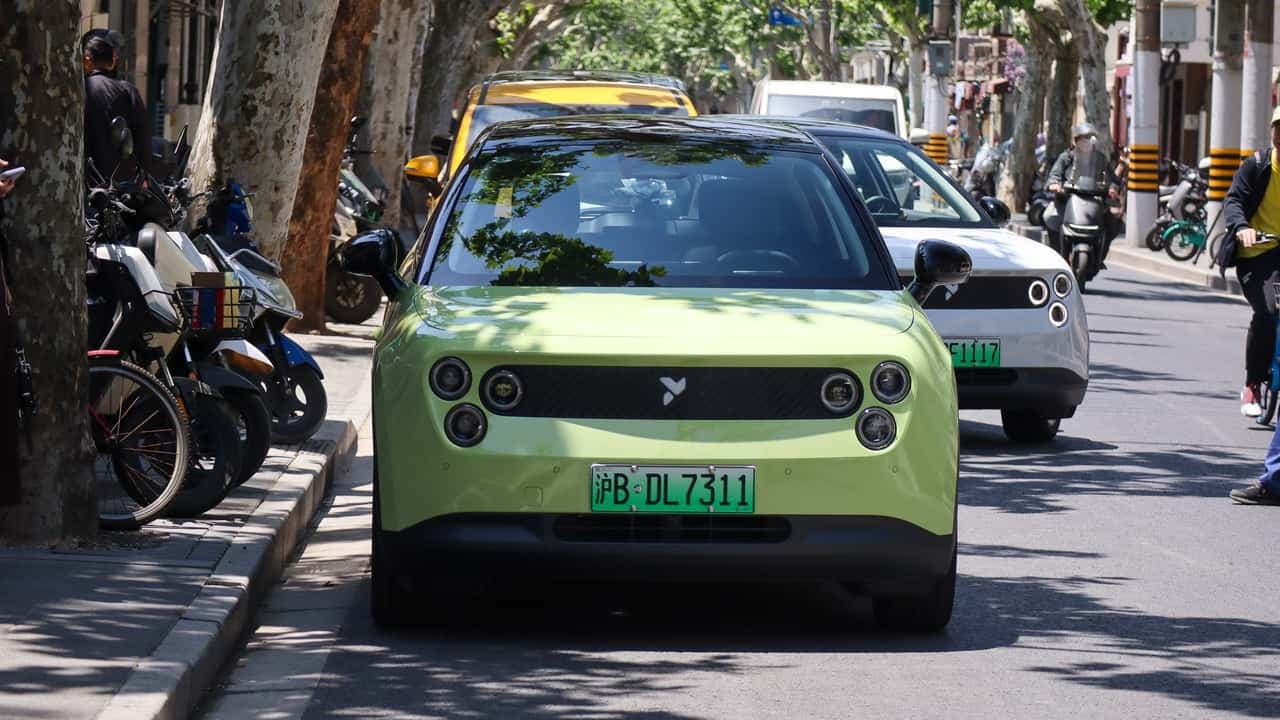
The End of Range Anxiety: The Nio Firefly Upgrade
For most electric vehicle owners, the range specified on the window sticker is a permanent commitment. Aside from natural degradation, the battery capacity you drive off the lot with is the capacity you remain with for the life of the vehicle. Nio, the Chinese automotive innovator, is challenging this industry standard by introducing a modular hardware upgrade program for its Firefly city car line. By allowing owners to physically replace their existing power source with a more energy-dense unit, Nio is treating vehicle range as a fluid asset rather than a static hardware limitation.
The current entry-level Nio Firefly features a 42.1 kWh battery pack, providing a range of approximately 420 kilometers (261 miles) on China's CLTC cycle. While sufficient for urban commuting, the company is now rolling out an optional 60 kWh pack that extends that capability to 560 kilometers (348 miles). This significant jump in capacity, roughly 33%, transforms the vehicle's utility, moving it from a strict city runabout to a more versatile companion for regional travel.
Engineering the Upgrade: Chemistry over Footprint
The most impressive aspect of this upgrade is that it requires no structural modifications to the vehicle. According to reports from the brand's recent owner events, the new 60 kWh battery is dimensionally identical to the base model's 42.1 kWh pack. Nio achieves this through a strategic shift in battery chemistry rather than a brute-force approach to volume. By moving from lithium-iron phosphate (LFP) chemistry to a more energy-dense nickel-cobalt-manganese (NCM) composition, the engineers at CATL—Nio's battery supplier—have managed to pack significantly more energy into the same physical enclosure.
This compatibility is made possible by Nio’s sophisticated, long-standing battery-swapping infrastructure. While most Western manufacturers view battery packs as integrated structural components—often bonded to the chassis—Nio has built its brand on the idea of the battery as a swappable, modular commodity. This architecture allows the swapping stations to act as service hubs where the physical swap can be performed efficiently, turning what would typically be a major repair shop project into a routine service procedure.
Why It Matters
- Future-Proofing: This model allows owners to benefit from advancements in battery chemistry without needing to buy a new vehicle, extending the total lifecycle of the car.
- Market Flexibility: By offering a mid-tier upgrade, Nio avoids the 'one-size-fits-all' trap, allowing users to pay only for the range they actually require.
- Infrastructure Synergy: The upgrade program highlights the tangible benefits of a unified battery-swapping network, which provides the logistics backbone for modular hardware swaps.
A Shift in the Global EV Landscape
In North America and Europe, the concept of a modular, upgradeable battery remains almost entirely absent from the consumer market. Outside of niche cases, such as experimental designs or rare out-of-warranty replacements, the batteries in most Western EVs are effectively permanent. While Ferrari has hinted at a modular design for its upcoming electric platforms that could allow for future chemistry updates, the industry at large remains focused on fixed-capacity packs that define the car's identity from the moment it leaves the factory.
Nio’s move represents a fundamental shift in the economics of electric motoring. By de-linking the vehicle's chassis from the battery's lifespan and capacity, the company is effectively decoupling the car from the rapid pace of battery innovation. As more details emerge from the upcoming October 23 launch event, the industry will be watching closely to see if this model of 'hardware-as-a-service' can gain traction beyond China’s specific regulatory and infrastructure environment.