Scaling Up Sustainable Public Transit
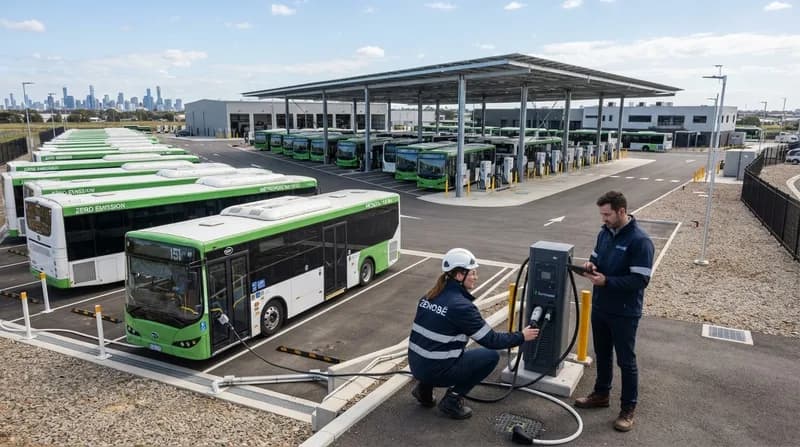
The transition to zero-emission public transport is taking a massive leap forward in Australia. CDC Victoria, a subsidiary of the global transport giant ComfortDelGro, has officially tapped fleet electrification specialist Zenobē to undertake a comprehensive overhaul of its Truganina bus depot in western Melbourne. This project marks a critical shift in the city’s infrastructure, positioning the site to support one of the largest electric bus operations in the region.
As part of the initiative, Zenobē will manage the full design and implementation of the site’s electrical and civil works. The scale of the installation is substantial: the plan includes the deployment of 65 dual-lead DC fast chargers. These units have been strategically selected to provide enough capacity for over 130 electric buses initially, with pre-installed capacity to add 20 additional charging points as the fleet grows. This forward-thinking approach ensures that as demand for cleaner, quieter transit increases, the depot won't need a total redesign to scale its output.
Strategic Infrastructure Planning
Beyond the hardware installation, the project focuses on sophisticated energy management. Zenobē has conducted detailed modeling of the depot’s energy consumption patterns, balancing the immediate charging needs against long-term grid demand. By sizing the grid connection to handle both current daily routes and future expansion, the partners are mitigating the risk of power bottlenecks that often plague large-scale fleet transitions.
The upgraded Truganina facility is a key pillar in the Victorian Government’s broader 'Metropolitan Zero Emission Bus' program. This government-backed initiative aims to replace 600 legacy diesel buses with modern, battery-electric models by 2035. For commuters, the change will be immediately noticeable: the electrification project supports an expansion of services, adding 470 weekly trips across major routes including the 170, 180, 190, and 192, alongside extended operating hours and increased service frequency.
Why It Matters
- Decarbonization: The project directly supports Victoria's 2035 mandate to transition the entire state bus fleet to zero-emission technology.
- Scalable Design: By building in expansion capacity for an additional 20 chargers, the depot avoids redundant construction costs as the fleet size increases.
- Operational Reliability: Using data-driven power modeling ensures the local grid remains stable despite the heavy electrical load required for high-frequency bus charging.
- Service Expansion: The infrastructure upgrade facilitates a massive boost in service availability for the western Melbourne corridor, proving that sustainability and high-performance transit can go hand-in-hand.