Accelerating the Transition Through Point-of-Sale Incentives
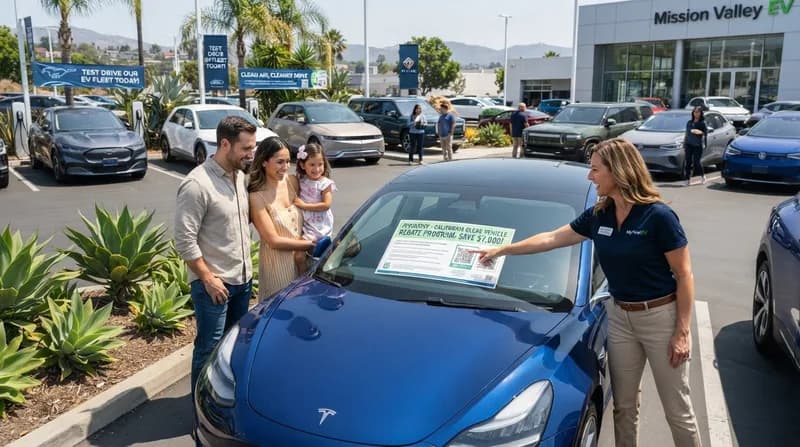
California’s aggressive push toward a zero-emission future has hit a significant milestone. Governor Gavin Newsom recently announced that nearly 12,000 residents have successfully utilized the state’s 'MyFirstEV' incentive program to make the switch to electric mobility. Launched in August 2026, the program serves as a critical bridge for consumers following the expiration of federal tax credits, offering a streamlined path to ownership by providing discounts directly at the dealership.
Unlike traditional rebate systems that often require complex post-purchase applications and long waiting periods, MyFirstEV provides an immediate financial reduction of $3,500 for eligible new vehicles or $1,750 for qualified used models. This 'instant' nature of the discount is credited with removing one of the most significant barriers to entry for first-time EV buyers: upfront affordability.
Program Scope and Strategic Partnerships
The program is structured as a collaborative effort between the state government and the automotive industry. With $135.5 million in state funding backed by an equal, dollar-for-dollar match from participating manufacturers, the initiative has generated a total of $271 million in consumer-facing support. Major automotive players currently participating in the scheme include Tesla, Rivian, Ford, GM, Honda, Hyundai, Kia, Lucid, Nissan, Subaru, Toyota, and Volvo.
To qualify, vehicles must meet specific price caps—$50,000 for new vehicles and $25,000 for pre-owned models—ensuring that the subsidies reach households looking for practical, entry-level electric solutions. This strategic focus has clearly resonated with the public, as zero-emission vehicles (ZEVs) climbed to capture 19.1% of all new car sales in California during the third quarter of 2026.
Why It Matters
- Reduced Friction: By removing the complexity of tax credit filings, the point-of-sale model lowers the psychological and financial barrier for first-time buyers.
- Market Alignment: The program incentivizes manufacturers to keep vehicle pricing competitive, as only models under the $50,000 threshold qualify.
- Infrastructure Synergy: The surge in EV adoption coincides with California’s massive expansion in grid-scale battery storage, which has surged from under 700 MW in 2019 to over 21,112 MW today.
The success of the MyFirstEV program represents more than just a sales figure; it underscores a shift in how policy can effectively stimulate consumer behavior. As California works toward its broader climate goals, the state’s ability to pair direct financial assistance with robust grid infrastructure is setting a blueprint for other regions aiming to decouple transportation from volatile global oil markets and long-term environmental degradation.