E-BUZZ ME Logo
ScienceTechnical Deep Dive

AI-Enhanced Sampling Improves Extreme Weather Prediction

Published
AI-Enhanced Sampling Improves Extreme Weather Prediction
1 min read148 words

The Gist

A new approach combining artificial intelligence with physical climate modeling is enabling scientists to better characterize and predict rare, high-impact weather events.

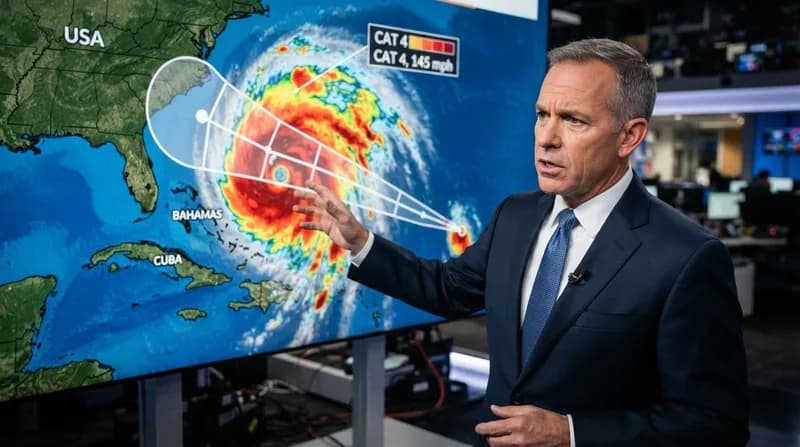
Researchers have developed a new methodology that integrates artificial intelligence with traditional physical climate modeling to improve the detection and analysis of rare weather events. By utilizing AI-enhanced rare-event sampling, scientists can now identify extreme atmospheric conditions that were previously difficult to capture using standard simulation techniques.

Bridging Physics and Machine Learning

The core of this advancement lies in the ability of AI to accelerate the sampling process within complex climate models. Instead of relying solely on computationally expensive simulations that may miss infrequent but devastating events, the AI identifies patterns that lead to extremes, allowing the physical model to focus its resources on those critical scenarios.

This hybrid approach provides a more accurate characterization of risks such as heatwaves, intense flooding, and severe storms. By bridging the gap between historical data and predictive physics, the research offers a more robust framework for climate resilience and disaster preparedness.


Related Stories

Semantically matched articles, ranked by topic overlap and freshness.

Quarks and Qubits: The Quantum Computing Revolution in Particle Physics
Science69%

Quarks and Qubits: The Quantum Computing Revolution in Particle Physics

New research explores how the intersection of quantum information and general relativity could redefine our understanding of subatomic particles.

Unlocking New Conductivity Pathways in Mott Insulators
Science67%

Unlocking New Conductivity Pathways in Mott Insulators

Recent research into laser-driven feedback effects in Mott insulators reveals groundbreaking methods for engineering conductivity in strongly interacting systems.

The Future of Medical Imaging: Insights from Simon R. Cherry
Science67%

The Future of Medical Imaging: Insights from Simon R. Cherry

Former PMB editor-in-chief Simon R. Cherry discusses the evolving landscape of molecular imaging and non-invasive technologies in medical physics.

Predictable Antarctic Ice Loss Offers Decades for Sea Level Preparation
Science66%

Predictable Antarctic Ice Loss Offers Decades for Sea Level Preparation

New research suggests that Antarctic ice retreat may remain predictable through 2050, giving governments a critical window to implement coastal defenses.

Super El Niño Set to Break 150-Year Temperature Records
Science66%

Super El Niño Set to Break 150-Year Temperature Records

A developing 'super' El Niño in the tropical Pacific has a 90 percent chance of becoming the strongest in recorded history, threatening unprecedented global heat.

Top Environmental Fund Bets on Japan to Solve AI Power Demands
Tech & Gadgets64%

Top Environmental Fund Bets on Japan to Solve AI Power Demands

Asia's leading environmental fund is increasing its exposure to Japan, citing the nation's tech sector as critical for managing the AI industry's energy needs.

Simple AI Prompt Resolves Decades-Old Mathematical Conjecture
Science63%

Simple AI Prompt Resolves Decades-Old Mathematical Conjecture

For the second time in a week, artificial intelligence has disproved a long-standing mathematical conjecture using surprisingly basic prompts.

Fields Medal 2026: Mathematicians Honored for Unifying Physics Laws
Science60%

Fields Medal 2026: Mathematicians Honored for Unifying Physics Laws

The prestigious Fields Medal has been awarded to mathematicians whose groundbreaking work bridges the gap between geometry and the fundamental laws of physics.