Scaling European Battery Production
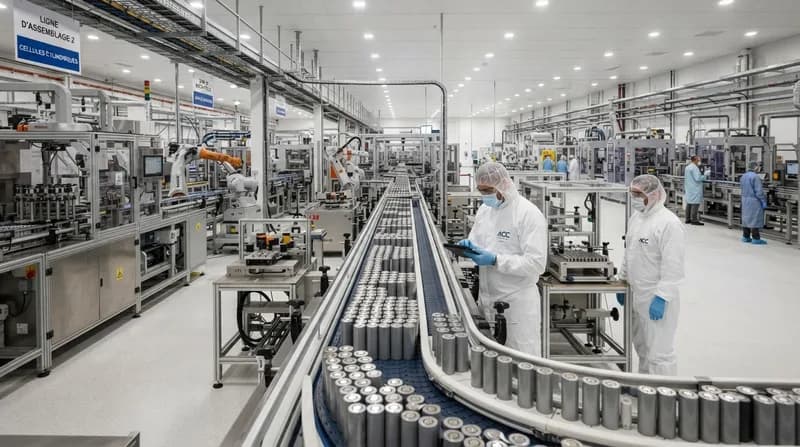
The Automotive Cells Company (ACC), a high-profile joint venture between industry titans Stellantis, Mercedes-Benz, and TotalEnergies subsidiary Saft, has officially reached a significant production milestone. The company announced the manufacturing of its five-millionth battery cell at its flagship facility in Douvrin, France. This achievement serves as a symbolic marker for the company's industrial maturation, signaling that Europe is capable of developing and scaling advanced lithium-ion battery technology on its own soil.
Currently, the Douvrin site produces enough cells to supply approximately 40,000 electric vehicles. However, the company is not resting on its laurels. ACC has unveiled plans to commission a second production block in 2027, which will inject an additional 12.9 GWh of capacity into the facility. This expansion is critical for meeting the requirements of Mercedes-Benz electric vehicles, ultimately pushing the site toward a total capacity of nearly 26 GWh. The long-term vision for the gigafactory is a three-block configuration, capable of outputting a combined 40 GWh annually.
Current Integration and Market Impact
The fruits of ACC’s labor are already hitting the streets. Their proprietary NMC (Nickel Manganese Cobalt) battery cells are currently integrated into eight premium electric vehicle models under the Stellantis umbrella. This roster includes popular models such as the Peugeot E-3008 and E-5008, the Jeep Compass, Lancia Gamma, DS N° 7 and N° 8, Citroën C5 Aircross, and the Opel Grandland. By powering these diverse platforms, ACC is playing a pivotal role in the electrification strategies of some of Europe's most storied automotive brands.
Despite the celebratory tone of the five-millionth cell milestone, the path forward remains rigorous. ACC management acknowledges that while production is stabilizing and defect rates are steadily approaching target levels, the company is still navigating the growing pains inherent in domestic battery manufacturing. The focus has shifted toward refining internal processes to ensure that output can keep pace with the high demand for long-range EV variants, which currently suffer from significant delivery backlogs.
Why It Matters
- Strategic Autonomy: As the EU pushes for the Industrial Accelerator Act (IAA), ACC stands as a test case for whether "Made in Europe" battery initiatives can compete globally.
- Supply Chain Resilience: With major automakers like Stellantis previously forced to pause production lines due to supply constraints, the ramp-up at Douvrin is essential for preventing future inventory bottlenecks.
- Technological Shift: By narrowing its scope from three proposed plants down to the Douvrin facility, ACC is focusing its capital and human resources on optimizing a single site to ensure industrial success.
The Road Ahead: Navigating Demand and Policy
The automotive industry is currently grappling with a disconnect between high customer demand for long-range, high-capacity EV batteries and the current manufacturing capacity. Many fleet customers and private buyers are finding themselves in queues that stretch well into 2027, particularly for models equipped with the larger 97 kWh battery packs. While ACC has made strides in production stability, the company must now balance the need for volume with the stringent quality standards required by premium automakers.
Looking toward the future, the success of ACC will likely hinge on the implementation of supportive industrial policy. CEO Allan Swan has emphasized that for European battery manufacturing to flourish, the regulatory environment must foster a level playing field. If the industry can continue to drive down defect rates while hitting the planned capacity of 40 GWh, it will transform from a struggling startup into the cornerstone of Europe’s electric vehicle supply chain.