A New Frontier for Battery Circularity
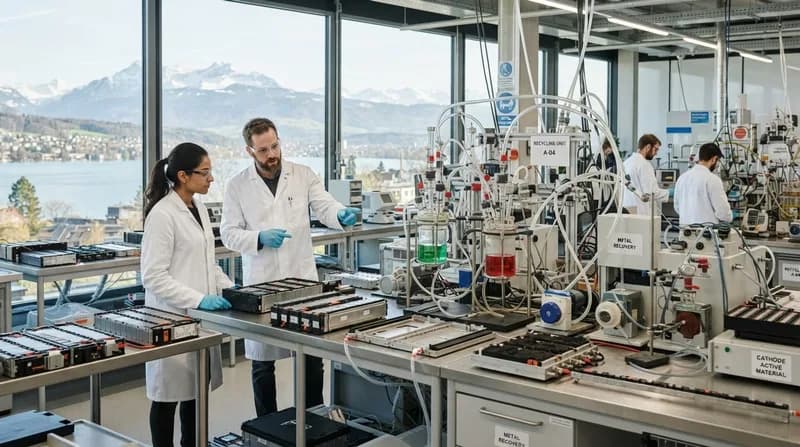
The global race to secure sustainable battery supply chains has taken a significant turn in Switzerland. Green Science Alliance (GSA), the Japanese chemical and technology firm, has officially inaugurated a new battery recycling laboratory located within the Switzerland Innovation Park Biel/Bienne (SIPBB). This move marks a strategic expansion into the European market, with the facility serving as a collaborative hub between GSA and the Swiss Battery Technology Center (SBTC).
At the heart of this partnership is a common goal: transforming the economics and environmental impact of end-of-life battery recycling. By leveraging GSA’s expertise in material science—specifically in deep eutectic solvents and metal-organic frameworks—the laboratory aims to shift the industry away from energy-intensive, multi-stage refining processes toward a more streamlined, "direct" recycling approach.
The Direct Recycling Philosophy
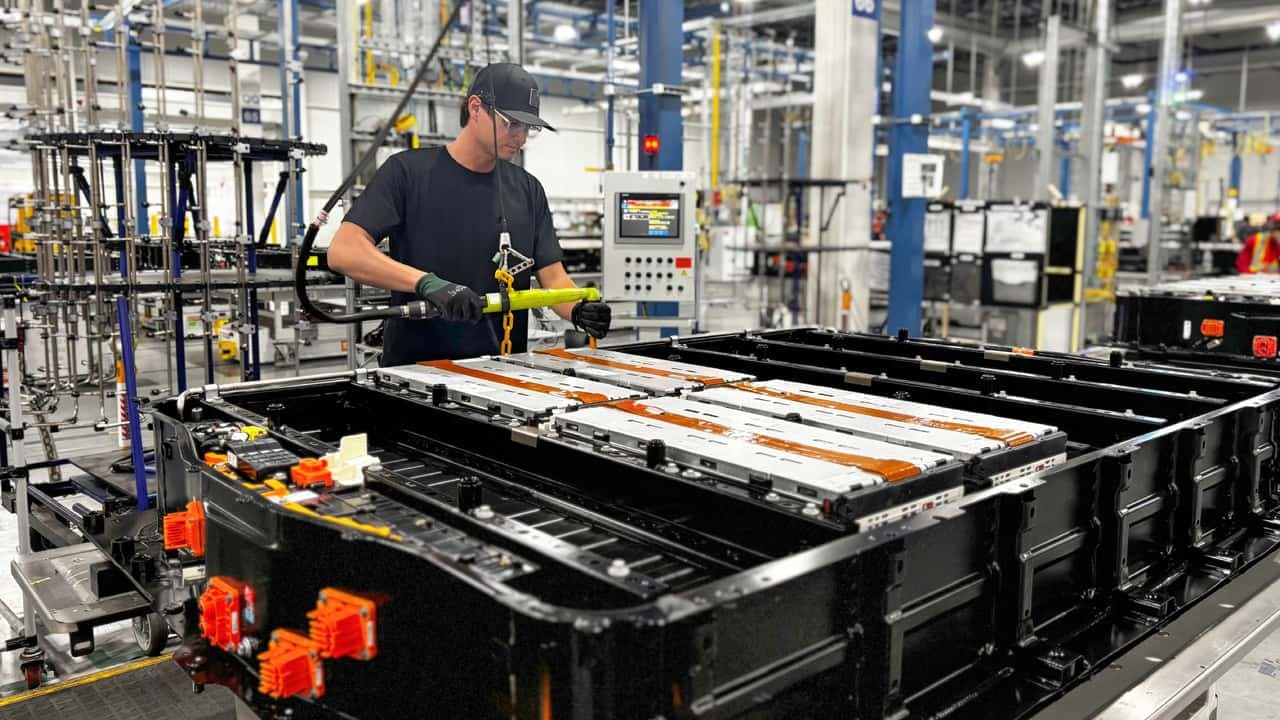
Traditional recycling methods rely on breaking down used batteries into their raw elemental components, such as individual lithium, cobalt, or nickel, through aggressive acid or alkali treatments. This process is both costly and chemically intensive. GSA’s approach focuses on what is known as 'black mass,' the dark, powdery substance left behind after mechanical shredding. Instead of isolating the raw metals, GSA seeks to chemically regenerate the cathode active materials directly from this mass.
By bypassing the extraction phase, the company hopes to significantly reduce the waste, energy consumption, and steps required to produce battery-grade materials. Preliminary lab results indicate that cathode material regenerated via this method can retain over 90 percent of the capacity found in brand-new commercial-grade materials. While these figures were achieved in a controlled environment, the technology is being developed to handle both Nickel-Manganese-Cobalt (NMC) cells and the increasingly popular Lithium Iron Phosphate (LFP) chemistry, the latter of which is often difficult to recycle economically using traditional methods.
Why it Matters: Resiliency and Regulations
- EU Compliance: With strict EU Battery Regulations mandating specific recycled content targets by 2031, manufacturers are under pressure to source secondary raw materials efficiently.
- Economic Viability: Current industry studies, such as the EU’s Safeloop report, suggest that recycling is currently a net-loss activity, costing roughly €1.90 per kilogram. Simplifying the process is essential to flipping this into a profitable enterprise.
- Supply Chain Independence: Successfully demonstrating direct recycling would reduce Europe's heavy reliance on newly mined materials, creating a more closed-loop, resilient manufacturing ecosystem.
Scaling from Lab to Industry
The collaboration between GSA and the SBTC is currently in its initial feasibility stage, bolstered by an 'Innovation Cheque' from the Swiss funding agency Innosuisse. This phase will run for six months, focusing on refining the material processing techniques, building sample electrodes, and validating cell performance. The division of labor is clear: GSA provides the proprietary recycling technology, while the SBTC provides the infrastructure, analytical capabilities, and cell-testing expertise.
Looking ahead, the success of this project hinges on whether these promising laboratory results can be scaled to industrial quantities without sacrificing the 90-percent capacity retention threshold. If GSA can prove that its direct-recycling method is both robust and commercially scalable, it could provide a vital blueprint for the European battery sector as it works to meet aggressive sustainability mandates and reduce the environmental footprint of the electric vehicle revolution.