The Evolution of Bone Repair
After more than a decade of development, a pioneering bone adhesive has officially moved from the laboratory bench to the operating theater. In a significant medical milestone, surgeons in England successfully utilized the synthetic glue on a patient during knee surgery this past August. This procedure marks the first human participation in a clinical study aimed at evaluating the material’s effectiveness in repairing complex fractures located near joints.
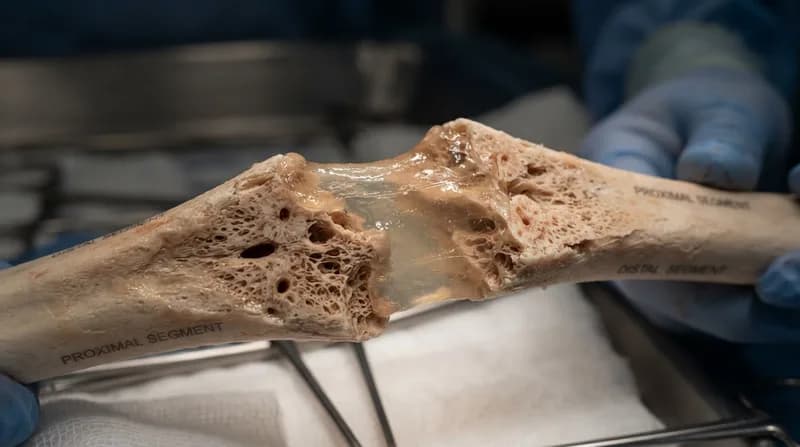
The adhesive is the result of years of interdisciplinary collaboration, originally sparked at the Ångström Laboratory by researchers Håkan Engqvist and Philip Procter. Following successful proof-of-concept testing, which included famously dramatic experiments using cow bones hung from an apple tree, the project was transitioned to the Irish firm Biomimetic Innovations Ltd. for commercialization and formal clinical validation. The ongoing study, conducted in partnership with the University of Leeds Teaching Hospital, focuses on 'depressed' fractures, where bone near a joint has cracked and compressed, creating a void that conventional stabilization methods struggle to fill effectively.
The Science of Bio-resorbable Bonding
The substance functions as a specialized bone-filling material with a unique chemical profile designed to mimic the body's natural healing processes. It is composed primarily of calcium phosphate and phosphoserine mixed with water. This specific combination creates a stable, high-strength bond that hardens rapidly upon application, providing immediate structural support to fragmented bone segments.
Perhaps most innovative is the material's bio-resorbable nature. Because calcium phosphate is a naturally occurring component of the human skeleton and phosphoserine is a molecule familiar to the body’s biological pathways, the glue is designed to be temporary. As the body begins to heal and regenerate, the adhesive gradually breaks down and is naturally replaced by the patient’s own bone tissue. This creates a seamless transition from temporary fixation to permanent structural integrity.
Why It Matters
- Enhanced Healing: By filling voids in complex fractures, the glue provides a scaffold that supports bone regeneration in areas that are notoriously difficult to treat.
- Minimized Hardware: The material could potentially reduce the reliance on invasive metal screws or plates, which often require secondary surgeries for removal.
- Clinical Validation: Transitioning from animal models to human trials is the ultimate 'stress test' for biomaterials, providing critical feedback from surgeons on usability and performance in real-world trauma scenarios.
For the researchers involved, this clinical trial represents the fulfillment of a long-standing goal. Moving a biomaterial from theoretical chemistry to a surgical standard of care is a rigorous, high-stakes journey. As the clinical trial progresses, the team hopes to confirm whether the adhesive meets the high demands of orthopedic surgery or if further iterations are required to optimize its application in the field.