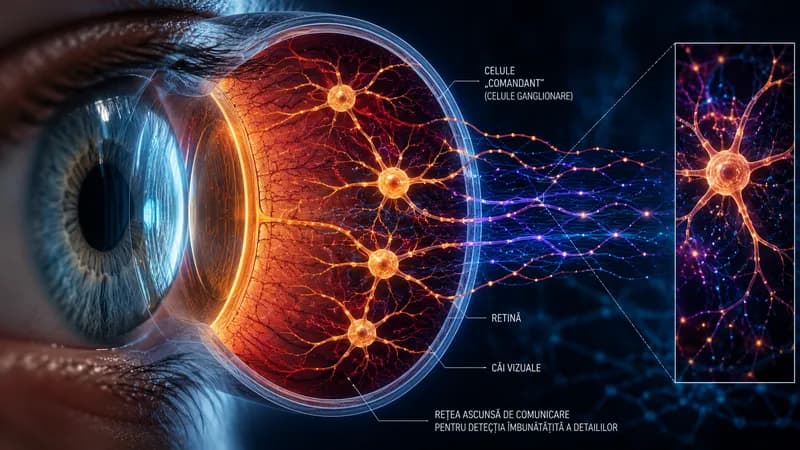
A groundbreaking study by researchers at Yale University has revealed a previously unknown layer of complexity within the human visual system. The team discovered that the retina does not merely process information through isolated channels; instead, it utilizes a hidden communication network that allows separate visual pathways to cooperate in real-time.
The Role of the 'Commander' Cell
Central to this discovery is a newly identified type of cell that acts as a coordinator or 'commander' for the system. Traditionally, it was believed that different visual circuits operated independently to relay information to the brain. However, these commander cells appear to synchronize activity across these pathways, significantly boosting the eye's ability to perceive faint details and subtle movements that might otherwise go undetected.
This finding challenges long-held assumptions about retinal architecture and could have profound implications for our understanding of vision disorders. By mapping how these cells integrate signal processing, scientists may develop new insights into how the eye maintains high sensitivity in challenging lighting conditions.