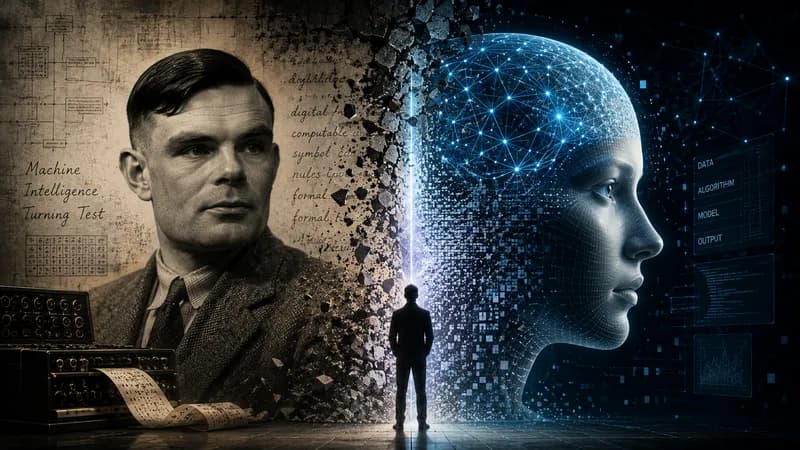
Since Alan Turing’s seminal 1950 paper, the pursuit of artificial intelligence has been largely driven by the assumption that human thought processes can be replicated through computation. However, a new book by Peter J. Denning suggests that this foundational premise may be fundamentally flawed.
The Limits of Computation
Denning argues that while modern AI and large language models (LLMs) have achieved remarkable feats in data processing and pattern recognition, they lack the essential pillars of human intelligence. According to his research, elements such as common sense, intuition, cultural context, and practical 'know-how' are not merely complex algorithms, but qualities that cannot be encoded into computer hardware or software.
A Barrier to True Human-Level AI
The core of the argument rests on the distinction between information processing and genuine understanding. Denning suggests that no matter how large or sophisticated neural networks become, they will continue to struggle with the nuances of human experience. This perspective challenges the current industry trajectory, implying that the goal of achieving true human-level AI may be an impossibility due to the inherent nature of digital systems.