The Infrastructure Paradox of Robotics
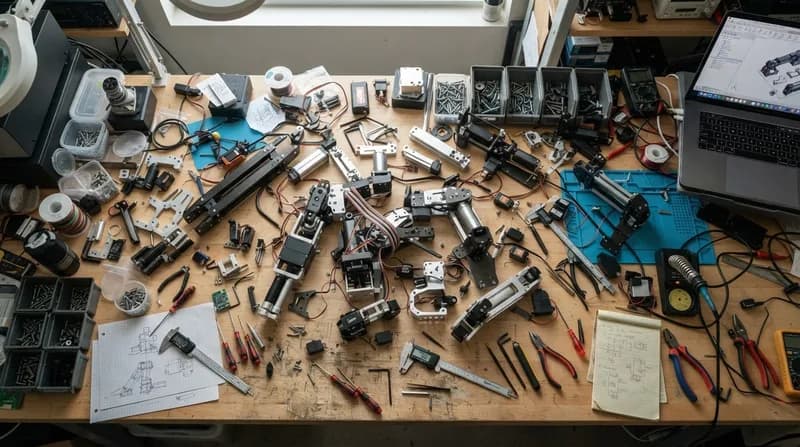
For years, the technology sector has been waiting for a 'ChatGPT moment' in robotics—that single, transformative flash of innovation where a general-purpose foundation model suddenly makes sophisticated automation accessible to everyone. However, according to Amulya Vishwanath, a veteran of Nvidia’s robotics division and current managing partner at Techable VC, the industry is not quite at that inflection point. Instead, she characterizes the current state of robotics as a 'Lego era,' a period where the fundamental building blocks of the discipline are being dismantled and reconstructed from the ground up.
While many startups are racing to deploy generative AI agents into robotic bodies, Vishwanath argues that the hardware-software interface is not yet ready for a plug-and-play revolution. The basic components that dictate real-world performance—actuators, specialized robotic hands, and essential safety protocols—are currently undergoing a necessary evolutionary process. Until these physical building blocks are standardized and optimized for high-performance interaction with the physical world, software-first approaches will continue to face significant friction.
The Shift to Physical AI
Vishwanath’s perspective is informed by seven years of leading product marketing for Nvidia’s robotics platforms, where she witnessed the gap between computational potential and physical execution. The current industry trend involves moving beyond simple, pre-programmed automation toward what is now termed 'Physical AI.' This transition requires far more than just a language model; it requires a deep, symbiotic relationship between advanced material science, low-latency sensory processing, and robust mechanical design.
The investment thesis for Techable VC centers on this reality. Rather than chasing the hype cycles of software-only AI, the firm is prioritizing the underlying physical infrastructure. This includes the development of more efficient robotic extremities that can mimic human dexterity, the refinement of sensors capable of operating in unstructured environments, and the establishment of new safety frameworks that can handle the unpredictability of human-occupied spaces. By investing in these foundational layers, Vishwanath aims to stabilize the 'Lego bricks' that will eventually support the highly capable, general-purpose robotics that the market expects.
Why it Matters
- The Hardware Bottleneck: The industry is recognizing that sophisticated AI models are only as effective as the physical bodies they control. Without highly reliable and dexterous hardware, intelligence remains trapped in digital simulations.
- Redefining Expectations: By focusing on the 'Lego era,' the investment community is shifting its gaze from the rapid, software-first development cycles of the web toward the slower, high-stakes development cycles of physical robotics.
- Safety Standards: The transition from specialized factory arms to collaborative mobile robots necessitates a complete overhaul of global safety standards, a process that inherently resists the 'move fast and break things' culture of software tech.
Ultimately, the wait for a watershed moment in robotics continues. While the AI community remains obsessed with scaling foundation models, the pioneers of the next generation of robotics are focused on the grit and grind of mechanical engineering. As these foundational pieces finally lock into place, the industry will likely see a more durable and practical evolution in robotics, moving away from novelty demonstrations and toward a future of meaningful, real-world productivity.