Reimagining Visual Intelligence
In a landscape dominated by AI models that treat images as static, one-time data points, startup Elorian is taking a different approach. The Palo Alto-based company, which turned heads with a $55 million seed round before ever releasing a product, has officially unveiled its flagship AI model: Glimpse. Unlike existing multimodal models that convert an image into tokens and then reason from memory, Glimpse is designed to engage with visual data dynamically throughout the reasoning process.
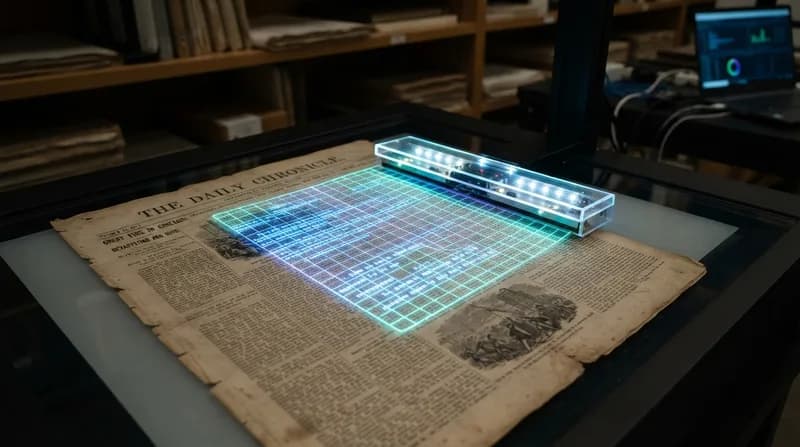
Elorian’s thesis is rooted in a fundamental critique of current AI limitations: most models do not truly 'see.' They describe images much like a person recalling a picture from memory. Glimpse, by contrast, employs what the company calls a 'visual scratch space.' This mechanism allows the model to pause, crop into specific regions of an image, or extract frames from a video to analyze them more closely. It is essentially the AI equivalent of a human squinting at a complex diagram or pinching to zoom on a photo to verify details before making a judgment.
Solving the 'IKEA' Problem
The motivation behind Glimpse stemmed from CEO Andrew Dai’s personal frustrations with the inability of current frontier models to navigate visual complexity. During a game night, Dai found that existing AI models struggled to determine the winner of a board game, largely because they lacked the ability to interpret the specific iconography and spatial relationships inherent in the board's layout. If humans can intuitively assemble IKEA furniture by looking at wordless, image-based diagrams, Dai reasoned that AI should be capable of the same.
By building the entire architecture around this iterative zooming and analysis process, Elorian claims to have achieved high-level performance without the massive computational bloat typical of larger models. Glimpse was trained by a small, agile team using only a few hundred GPUs, yet it is purportedly punching well above its weight class. In internal benchmarks, the company reports that Glimpse outperforms even industry stalwarts like GPT-6 Astra in specialized tasks, such as interpreting scientific charts and analyzing short-form video content.
Why It Matters
- Operational Efficiency: The model’s compact architecture suggests that advanced visual reasoning doesn't necessarily require the massive training clusters traditionally associated with frontier AI.
- New Capabilities: By enabling a 'visual scratch space,' Glimpse could unlock better performance for industries requiring precise visual interpretation, such as robotics, diagnostic medicine, and media editing.
- Cost-Effective Intelligence: With pricing set at $0.60 per million tokens in and $3 per million tokens out, Glimpse offers a competitive, mid-market alternative for developers who need specialized visual reasoning without the high cost of the absolute largest models.
Strategic Outlook and Future Trajectory
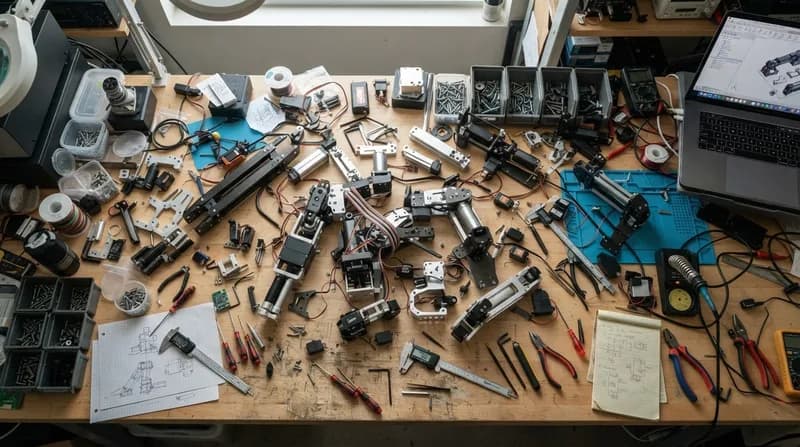
Elorian is initially positioning Glimpse toward sectors that manage vast quantities of video data, including scientific research labs, creative media houses, and the growing field of industrial robotics. The long-term vision is to transition the model from passive 'seeing' to active 'doing.' This includes the ambition to allow the model to build a spatial and logical map of a scene, which could then be used to inform physical actions and provide direct control for robotics platforms.
As Elorian opens up API access to Glimpse, the tech world will be watching to see if this 'look-before-you-leap' methodology can truly scale. With the backing of high-profile investors including Nvidia and Google chief scientist Jeff Dean, the startup is clearly aiming to set a new standard for visual intelligence, with the stated goal of topping every major visual reasoning benchmark by next year.