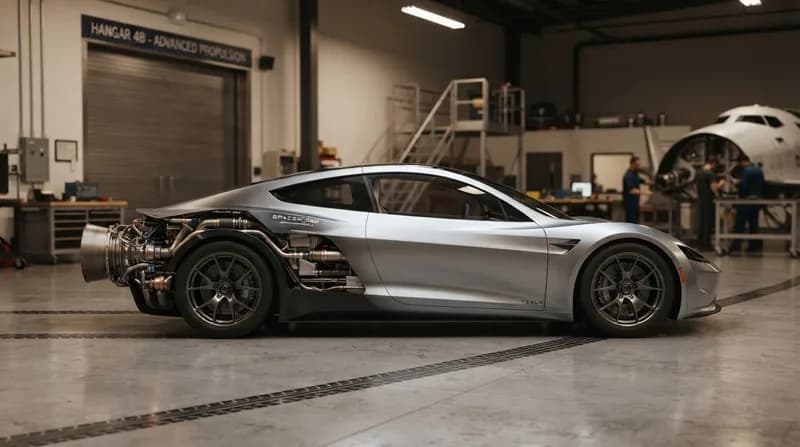
The SpaceX Integration
Tesla has officially ignited excitement for its highly anticipated next-generation Roadster, promising a leap in performance that blends traditional electric vehicle engineering with aerospace innovation. By leveraging specialized technology sourced from SpaceX, the vehicle is set to defy conventional automotive physics. This integration represents a significant departure from standard EV development, signaling Tesla’s intent to utilize its sister company’s expertise to push the limits of acceleration and handling.
Engineering Beyond the Road
The core of this collaboration centers on the use of cold-gas thrusters, a propulsion solution commonly found in spacecraft. Positioned strategically around the vehicle, these thrusters are designed to provide localized force, effectively giving the Roadster the ability to maneuver with a level of agility that exceeds the mechanical constraints of tires and suspension alone. By incorporating this propulsion hardware, Tesla aims to achieve sub-two-second acceleration times, firmly positioning the Roadster as an experimental marvel in the performance segment.
Why It Matters
- Tech Convergence: The project marks the first time that genuine space-grade propulsion hardware is being adapted for a consumer-facing electric vehicle.
- Performance Benchmark: By introducing gas-thruster assistance, Tesla is redefining the ceiling for electric drivetrain capabilities.
- Brand Differentiation: The strategy serves as a powerful reminder of Tesla’s unique ecosystem, where cross-industry collaboration serves as a primary driver for product innovation.
As the automotive industry keeps a close eye on Big Tech’s market volatility and AI-driven shifts, the Roadster serves as a tangible, high-hardware reality check. It proves that while software and AI continue to dominate headlines, the fusion of advanced material science and aerospace engineering remains a critical frontier for the electric mobility sector. The production model will represent a unique milestone in automotive history, merging the thrill of a supercar with the cold, hard logic of spacecraft engineering.