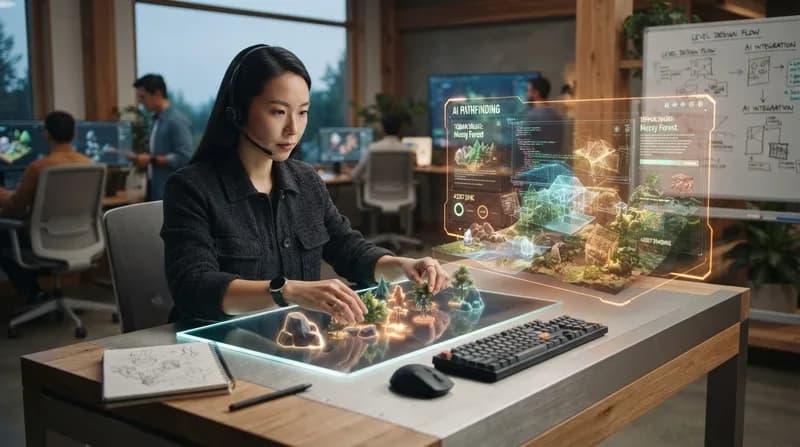
The Paradigm Shift in Game Development
The barrier to entry for game development is rapidly crumbling. As generative AI matures, solo developers are finding new ways to bridge the gap between creative concepts and functional in-game assets. By utilizing powerful open-source models like Stable Diffusion, creators can now manifest entire visual identities for their projects in a matter of hours, rather than weeks of manual texture painting or asset acquisition. This workflow marks a significant departure from traditional development cycles, prioritizing speed and iterative design.
Deploying Stable Diffusion for Asset Generation
The foundation of this creative process begins with establishing a cohesive art style. By leveraging Stable Diffusion, developers can generate high-fidelity concept art that serves as the visual roadmap for the entire game. Whether users choose a local deployment via the Automatic1111 WebUI—ideal for those with high-end hardware and GPU resources—or opt for cloud-based alternatives hosted on platforms like Hugging Face, the key lies in the quality of the prompt. Effective prompting involves steering the model toward specific aesthetic parameters. Developers have found that using modifiers like "isometric," "simple shapes," or referencing distinct artistic styles such as "James Gilleard" provides the consistency needed for game environments.
Integrating AI Art into Unity Environments
Transitioning from a 2D AI-generated concept to a playable 3D space requires a structured approach within a game engine like Unity. Once the concept art is finalized, developers can begin blocking out the scene using primitive geometry. This involves setting up the Universal Render Pipeline (URP) and translating the AI’s color palette into specific material configurations. The goal is to match the "feel" of the generated image through careful lighting adjustments—typically using warm sun values balanced with soft ambient light—and the use of orthographic camera projections to mimic the isometric look established in the initial generation phase.
Technical Implementation Steps
- Engine Setup: Utilize Unity 2021.9.3f1 or newer with the Universal Render Pipeline enabled.
- Lighting Strategy: Implement high-intensity sunlight combined with soft ambient light to create a cohesive scene mood.
- Camera Projection: Set the camera to orthographic mode to retain the clean, strategic visual of isometric art.
- Post-Processing: Employ ACES tonemapping and exposure adjustments to harmonize colors across materials and textures.
Why This Workflow Matters
The integration of AI into game development is not merely about automation; it is about empowerment. By offloading the initial "heavy lifting" of asset generation and style prototyping to AI, developers can focus their energy on core gameplay mechanics and narrative design. This hybrid approach to development—where AI handles the visual heavy lifting and human developers focus on logic, physics, and interaction—is drastically shortening the time-to-market for indie studios and individual creators alike. As these tools continue to evolve, we can expect to see an explosion of high-quality, creatively ambitious indie games built by smaller teams with massive vision.