Powering the AI Revolution
Schneider Electric SE has officially elevated its financial guidance, fueled by a relentless surge in demand for data center infrastructure. Amid market speculation regarding the longevity of the AI-driven tech boom, the company reports that its current pipeline offers clear revenue visibility extending through 2027 and even into 2028. This update serves as a powerful indicator that the build-out of physical hardware supporting artificial intelligence remains in its early, high-growth stages.
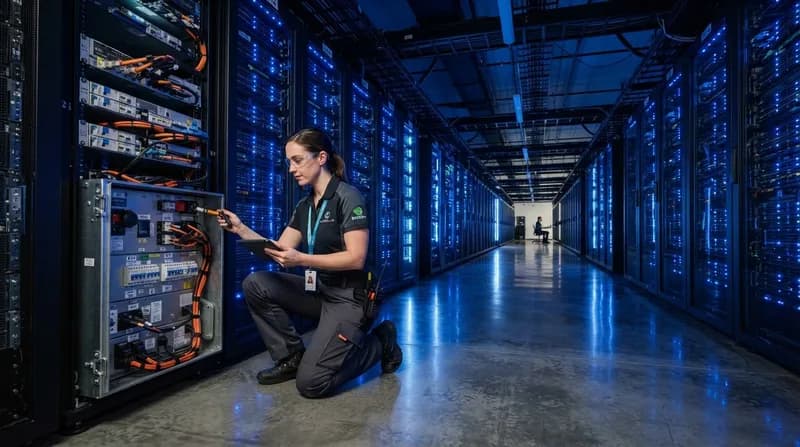
As hyperscalers and enterprise clients race to build facilities capable of handling the massive energy requirements of modern AI models, Schneider has positioned itself as an essential provider of power management and cooling solutions. Rather than showing signs of fatigue, the sector's capital expenditure continues to accelerate, with Schneider’s order books reflecting a transition from speculative planning to large-scale, multi-year deployment contracts.
Why It Matters
- Confidence in Hardware: The extended visibility into 2028 suggests that the 'AI boom' is not merely a software hype cycle but a structural overhaul of global compute infrastructure.
- Energy Scarcity as a Catalyst: Power constraints are the primary bottleneck for data centers, and Schneider's expertise in grid management and electrical distribution has become the industry's most sought-after asset.
- Market Stability: By confirming a stable long-term trajectory, Schneider is successfully calming investor anxieties regarding potential saturation in the AI infrastructure market.
Looking ahead, the focus for the company remains on streamlining the delivery of high-density power components. The transition toward accelerated computing requires cooling and energy efficiency standards that current legacy facilities cannot meet, forcing a massive wave of retrofitting and new construction. As these data centers continue to evolve into the backbone of the digital economy, Schneider’s role as an infrastructure backbone provider solidifies its market position, suggesting that the electrification of AI will remain a long-term driver of industrial activity.