The Case for Electric School Transportation
While India's public transport authorities have dominated the headlines for electric bus deployments, they only represent a sliver of the nation's total bus market. The vast majority—approximately 90 percent, or 1.6 million vehicles—are privately operated. Within this immense sector, school transport stands out as the most logical starting point for a large-scale shift to electric mobility. According to experts at the India Clean Transportation Summit 2026, the transition in the private segment will likely begin here.
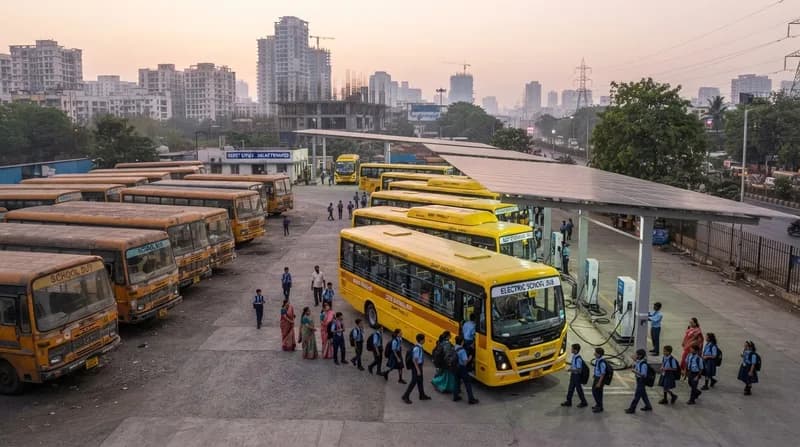
Dr. Laghu Parashar, a Senior Transport Specialist at the World Bank, notes that school transport accounts for nearly a third of all private bus usage in the country. Unlike long-haul tourism or staff transport, school buses are uniquely suited for the current limitations of battery technology. They typically operate on shorter, predictable routes of 50 to 60 kilometers per day and remain parked for long stretches, allowing ample time for slow-charging cycles, which are significantly easier on battery health than rapid charging.
Infrastructure and Operational Advantages
A primary bottleneck for electrifying private bus fleets is the lack of real estate. Many private operators currently rely on informal parking—using roadsides or rented spaces where installing dedicated charging infrastructure is impossible. Schools, however, possess a distinct advantage: they generally own the land where their buses are housed, making the installation of on-site charging stations a far more feasible endeavor.
Furthermore, the physical requirements for school buses are less taxing than those of city or intercity transit. Switch Mobility’s Head of Planning and Strategy, Vinoth Kumar R, pointed out that school buses are often 1 to 1.1 tonnes lighter than standard city buses, partly because they lack complex, power-hungry features like air conditioning. This lower gross vehicle weight allows for smaller, more cost-effective battery configurations that are perfectly suited to the specific, shorter duty cycles of student transport.
The Roadblocks to Widespread Adoption
Despite the inherent logic of electrifying school fleets, significant economic hurdles remain. Manufacturers have found that educational institutions are highly sensitive to price, often unwilling to absorb the current price premium that electric models command over their internal combustion engine (ICE) counterparts—sometimes double the cost. For smaller schools with fleets of fewer than ten vehicles, the capital expenditure required to build proprietary charging infrastructure is often viewed as a non-starter.
Why it matters:
- Regulatory Momentum: Delhi has pioneered a mandate requiring schools to convert 30 percent of their fleet to electric by 2030, offering access to public charging depots as a compromise.
- Economic Incentives: The Ministry of Heavy Industries is currently evaluating a massive 98.52 billion rupee scheme that may offer subsidized loan rates and credit guarantees for electric bus and truck adoption.
- Scale Projections: Projections indicate that if supportive policies are implemented nationally, India could see 90,000 private electric buses on the road by 2030, with schools accounting for a major share.
Ultimately, the industry is calling for a move toward standardization. If OEMs can develop a suite of purpose-built, 30- to 40-seat electric buses at a competitive price point, the school transport segment could shift from a niche pilot project to the bedrock of India's private EV ecosystem.