The Ultimate Towing Spectacle
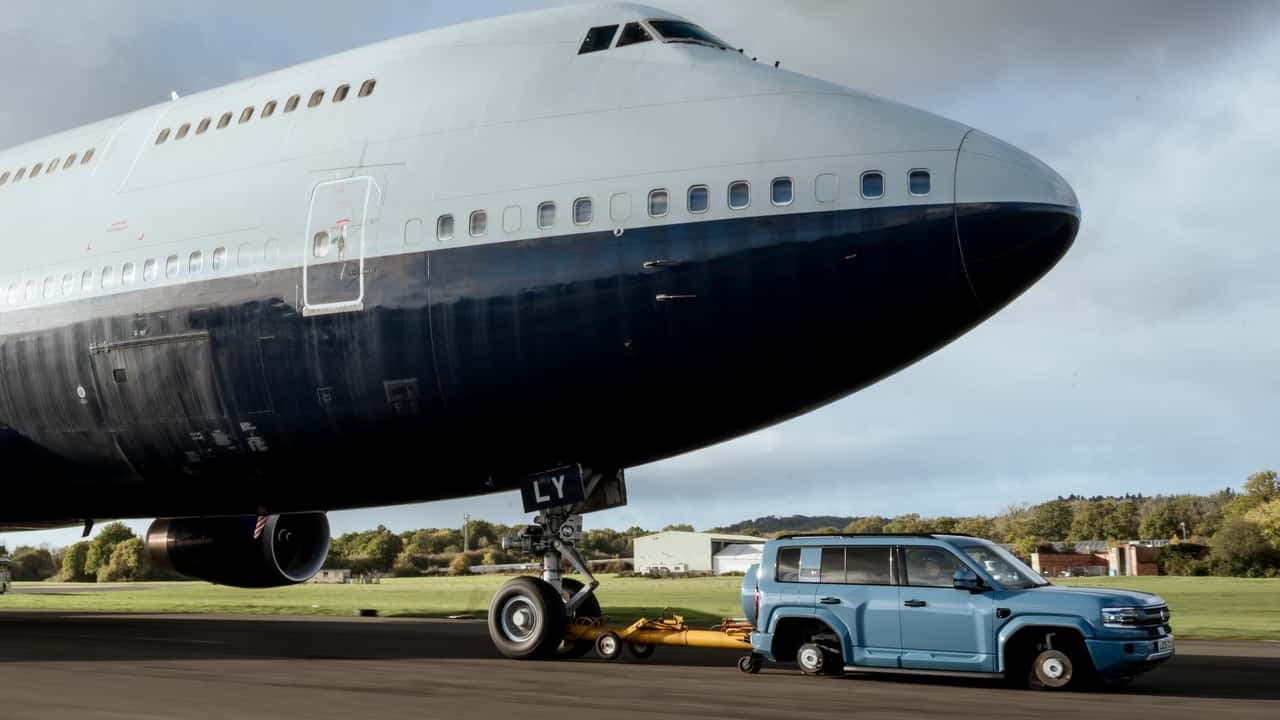
Two decades ago, a Volkswagen Touareg V10 diesel etched its name into automotive history by hauling a 171-ton jumbo jet down a runway. Today, BYD’s luxury subsidiary, Denza, has decided to rewrite that playbook. Utilizing their B5 plug-in hybrid SUV, the manufacturer returned to the Dunsfold runway in the United Kingdom—the hallowed ground of original Top Gear fame—to prove that modern electrification and clever engineering can outperform the iconic diesel powerhouses of the past.
This was not merely a repetition of an old trick; it was a calibrated demonstration of torque and structural integrity. While the original Volkswagen stunt utilized all four wheels, the Denza B5 team systematically pushed the envelope, removing wheels to showcase the immense capability of the vehicle's powertrain and chassis. By the final run, the SUV was hauling a 207-ton Boeing 747-400 across a mile of tarmac with the entire right side of the vehicle elevated, balancing on just two wheels.
Engineering the Impossible
The Denza B5 is built on a robust, bespoke ladder-frame chassis, a design choice that sets it apart from many unibody rivals like the Land Rover Defender. At its core, the vehicle utilizes a sophisticated dual-motor electric powertrain paired with a 1.5-liter gasoline engine that functions primarily as a high-voltage generator. This configuration delivers a combined 536 horsepower, which the stunt proved is more than sufficient to move a heavy jet when supplemented by advanced drivetrain management.
Technical specifications for the B5 highlight why this feat was possible. The vehicle features a 31.8-kWh battery pack integrated directly between the chassis rails, providing roughly 56 miles of pure electric range. Crucially, the SUV incorporates two mechanical locking differentials, which proved vital in distributing torque to the remaining wheels during the lopsided tug-of-war. During the stunt, the vehicle operated exclusively on electric power, a testament to the instantaneous torque characteristics inherent in electric motor setups compared to traditional internal combustion engines.
Why It Matters
- Performance Demonstration: The stunt serves as a high-visibility proof-of-concept for the B5’s structural rigidity and torque delivery, targeting potential buyers in competitive markets like the UK.
- Marketing Evolution: Moving from standard towing to a two-wheeled stunt highlights a shift toward high-impact, social-media-ready marketing campaigns that resonate with modern, digital-first audiences.
- Platform Capability: The success underscores the advantages of a ladder-frame design combined with modern electrification, providing a viable alternative to legacy combustion-powered off-roaders.
While the SUV required custom modifications—including a specialized towing attachment, interior ballast to compensate for the missing wheels, and external stabilizers for safety—the underlying hardware remained fundamentally consistent with the production-ready model. By performing the feat on electric power alone, BYD effectively challenged the narrative that hybrids are merely stepping stones, instead positioning the Denza B5 as a formidable tool that can handle extreme loads with poise and technical sophistication.