A Supply Chain Nightmare
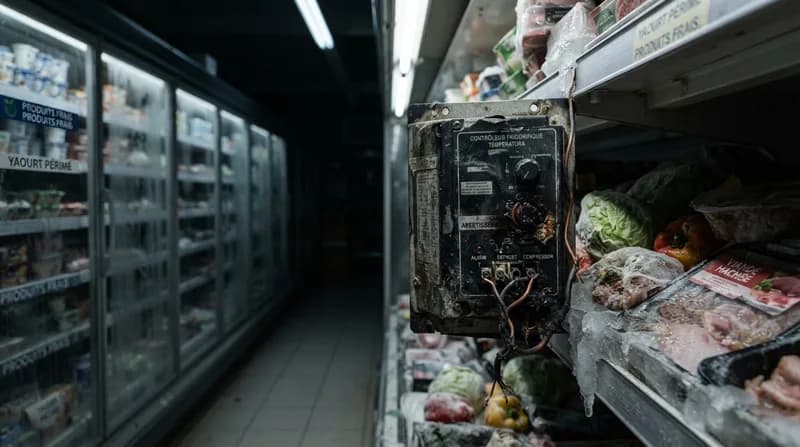
In a chilling demonstration of how digital vulnerabilities can manifest as physical catastrophe, nearly 700 supermarkets across France were recently forced to deal with a massive loss of inventory. Attackers successfully breached thousands of refrigeration controllers, remotely disabling their cooling functions and cranking the internal temperatures up to 122°F (50°C). The incident, which caused widespread food spoilage and even sparked fires, highlights a growing danger in the era of the Industrial Internet of Things (IIoT): the exposure of legacy operational technology (OT) to the public web.
The affected devices, primarily manufactured by Danfoss and Copeland (specifically the Dixell brand), were found to be running outdated firmware or lacked necessary security updates. By exploiting authentication bypasses and command execution flaws, the attackers turned climate-control infrastructure into a weapon, proving that modern cyber warfare is no longer limited to stealing data—it is now actively disrupting the basic logistics of human survival.
A Warning Ignored
Perhaps the most concerning aspect of this breach is that it was entirely foreseeable. Security researchers at Claroty’s Team82 had issued a public warning as early as August 2026, explicitly detailing how hackers could manipulate these controllers to “freeze” or “defrost” industrial-grade food storage units. Their research highlighted critical authentication and OS-command flaws that allowed unauthorized access to the systems.
The timeline of negligence stretches back even further. The US Cybersecurity and Infrastructure Security Agency (CISA) had issued advisories regarding vulnerabilities in Copeland XWEB controllers as early as February 2026, followed by similar alerts for Danfoss hardware in May. Despite manufacturers releasing firmware patches, the industry failed to act. Recent scans conducted by the cyber insurance firm Coalition identified thousands of these controllers still connected to the open internet, with hundreds of units remaining exposed even after the French attacks had already commenced.
Why It Matters
- OT Vulnerability: Operational technology like refrigeration, HVAC, and power grid controls are often overlooked compared to standard IT systems, making them soft targets.
- Lifecycle Neglect: Many of the compromised devices were “end-of-life” hardware, meaning they were no longer supported with security updates, yet remained connected to the internet.
- Supply Chain Risk: The incident serves as a wake-up call for the food and agriculture sectors, proving that digital security is directly tied to business continuity and safety.
- Visibility Gap: Thousands of devices were accessible via publicly reachable web-based admin panels, essentially leaving a digital door unlocked for bad actors.
The Path Toward Hardening Infrastructure
In response to the chaos, industry groups—most notably the Operational Technology Cybersecurity Coalition (OTCC)—are doubling down on their demands for stronger oversight. The coalition, which includes heavyweights like Honeywell, Schneider Electric, and Forescout, is urging CISA to issue a Binding Operational Directive. The goal is to force organizations within critical sectors to implement baseline cybersecurity measures, such as network segmentation and strictly forbidding direct internet access for OT hardware.
As the threat landscape evolves, companies can no longer afford to treat industrial controllers as "set it and forget it" hardware. The French supermarket incident serves as a stark, expensive lesson: if a device is connected to the internet, it is a target. Without a transition toward more secure architectures and a culture of proactive patch management, similar disruptions are likely only a matter of time.